
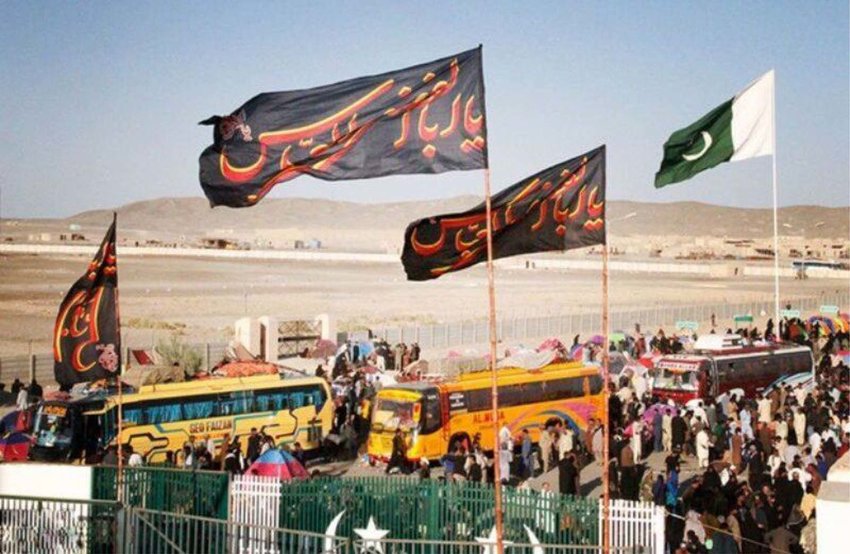
Pakistani nationals crossing into Balochistan through the Taftan border described scenes of panic, missile fire, and transport chaos as they rushed to leave Iran following weekend strikes by the United States and Israel.
At the remote crossing between Iran’s Mirjaveh and Taftan, a steady stream of people carried heavy suitcases through large metal gates. Freight trucks formed long queues nearby as returning travelers made their way into Pakistan.
Since Saturday, powerful explosions have rocked Tehran, prompting several embassies to advise their citizens to leave the country.
Ameer Muhammad, a 38-year-old trader, said Pakistanis living in Tehran and other cities began heading for departure terminals as soon as the strikes began.
“All our Pakistani brothers who were in Tehran and other cities had started to leave and were arriving at the terminal, which caused a lot of crowd pressure,” he said on Monday.
He added that the sudden rush created serious transport problems.
The Taftan border crossing lies about 500 kilometres from Quetta and is one of the most isolated crossings between the two countries. Witnesses said the Iranian flag was flying at half-mast as security personnel guarded the area.
Irshad Ahmed, a 49-year-old pilgrim, said he saw missiles being launched near his hostel in Tehran.
“There was an army base near the hostel, and we saw many missiles being fired,” he said.
After the escalation, he and others sought help from the Pakistani embassy. “We went to the Pakistani embassy so that they could evacuate us from there. They brought us here safely,” he said.
Prime Minister Shehbaz Sharif condemned the reported killing of Ayatollah Ali Khamenei, calling it a violation of international law.
“It is an age-old convention that the Heads of State/Government should not be targeted,” he wrote on X.
He added that the people of Pakistan stood with Iran “in their hour of grief and sorrow” and extended condolences on what he described as Khamenei’s martyrdom.
A teacher at the Pakistani embassy in Tehran, who identified himself as Saqib, said the situation initially appeared stable.
“Before we left, the situation was normal. The situation was not that bad,” the 38-year-old said.
However, he noted that the strikes on Saturday night significantly worsened conditions.
“The situation became bad on Saturday night, when attacks caused precious lives to be lost,” he said, explaining that the escalation ultimately forced them to leave the city.