
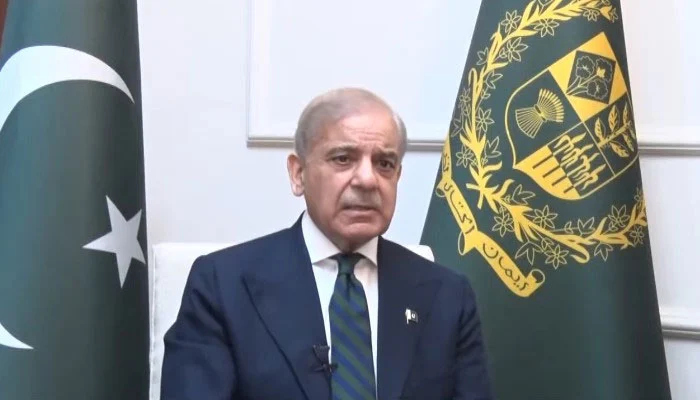
Prime Minister Shehbaz Sharif on Monday said the government is taking measures to provide relief to lower and middle-income groups amid rising fuel prices caused by the global oil crisis linked to the Iran war.
In recent weeks, the government has introduced a series of austerity measures aimed at reducing fuel consumption, alongside major cuts in development spending and restrictions on non-essential expenditures.
During a meeting chaired by the prime minister to review the impact of the Middle East conflict on Pakistan’s petroleum stocks and the relief measures being introduced for the public, officials informed him that the government was working closely with provincial authorities to finalise the registration process for motorcycle and rickshaw owners so they can benefit from the planned relief schemes, according to a statement issued by the Prime Minister’s Office (PMO).
Earlier, on March 17, the government had announced plans for a subsidised fuel scheme for motorcyclists and rickshaw drivers to help cushion the impact of the sharp rise in oil prices.
“We will not leave the economically weaker sections of society alone in this difficult time,” PM Shehbaz said.
The prime minister further stated that the government has significantly reduced its own expenditures, including cuts in the development budget and a decision to suspend the use of 60 per cent of government vehicles.
He added that the government had chosen not to pass on the full impact of the oil price increase and instead redirect saved funds towards public relief efforts.
PM Shehbaz also said that a digital system would be used to ensure targeted relief reaches the public effectively.
He noted that the government’s timely decisions regarding the fuel crisis had helped prevent any disruption in the country’s fuel supply.
The meeting also reviewed Pakistan’s diplomatic efforts aimed at restoring peace in the Middle East.
According to the statement, discussions also focused on the implementation of fuel conservation measures, the current petroleum stock situation and the future course of action.
Officials also presented an Intelligence Bureau audit report on the implementation of the austerity measures and the progress of the government’s fuel-saving campaign.
The prime minister was briefed that adequate fuel reserves are currently available to meet the country’s needs, and arrangements are also being made to ensure future supply.
The meeting was further informed that the recent increase in high-octane prices for large vehicles had not affected jet fuel prices.
Officials also confirmed that the country currently has sufficient medicine stocks to meet national requirements.