
ISLAMABAD: Negotiating teams from the United States and Iran could return to Islamabad later this week for a second round of peace talks, according to multiple sources, just days after the highest-level dialogue between the two countries in decades ended without a breakthrough.
Pakistan hosted direct talks between Tehran and Washington over the weekend, marking the most significant engagement between the two sides since 1979. While the discussions concluded on Sunday without an agreement, they also ended without a collapse in dialogue.
According to Reuters, a source involved in the negotiations said no final date had been set, but both delegations could return as early as the end of this week. A proposal has reportedly been shared with both countries to send their teams back for renewed talks.
“No firm date has been set, with the delegations keeping Friday through Sunday open,” a senior Iranian source said.
Two Pakistani officials familiar with the matter said Islamabad was in contact with both sides regarding the timing of the next round, which is likely to take place over the weekend.
“We have reached out to Iran and received a positive response that they are open to a second round of talks,” a senior Pakistani government official said, according to Reuters.
Another Pakistani source, speaking to AFP on condition of anonymity due to the sensitivity of the matter, said Islamabad was working to bring both sides back together and secure an extension of the ceasefire to allow more time for diplomacy.
“Efforts are underway to bring both parties back to the table. Of course, we want them back in Islamabad, but the venue has not been finalised yet,” the source said.
“The meeting could take place soon, though dates have yet to be confirmed,” the official added.
The source further said Pakistan was also working to extend the ceasefire beyond the current deadline to provide additional diplomatic space.
On Monday, officials familiar with the back-channel efforts told Dawn that mediators, with Pakistan at the centre and backed by Turkiye and Egypt, were actively working to bring Tehran and Washington back to the negotiating table.
The immediate priority, they said, was extending the ceasefire.
Prime Minister Shehbaz Sharif also told the federal cabinet on Monday that “full efforts” were being made to resolve the conflict.
He noted that the truce remained in place and said, “As I am talking to you, matters that are not resolved, full efforts are underway to resolve them.”
The ceasefire between the US and Iran, brokered on April 8 after weeks of conflict, is set to expire on April 22. Although still technically intact, it is becoming increasingly fragile.
Tensions have risen after the United States moved towards enforcing a naval blockade of Iranian ports, prompting Tehran to warn that such a move would violate the ceasefire.
US says decision now rests with Iran
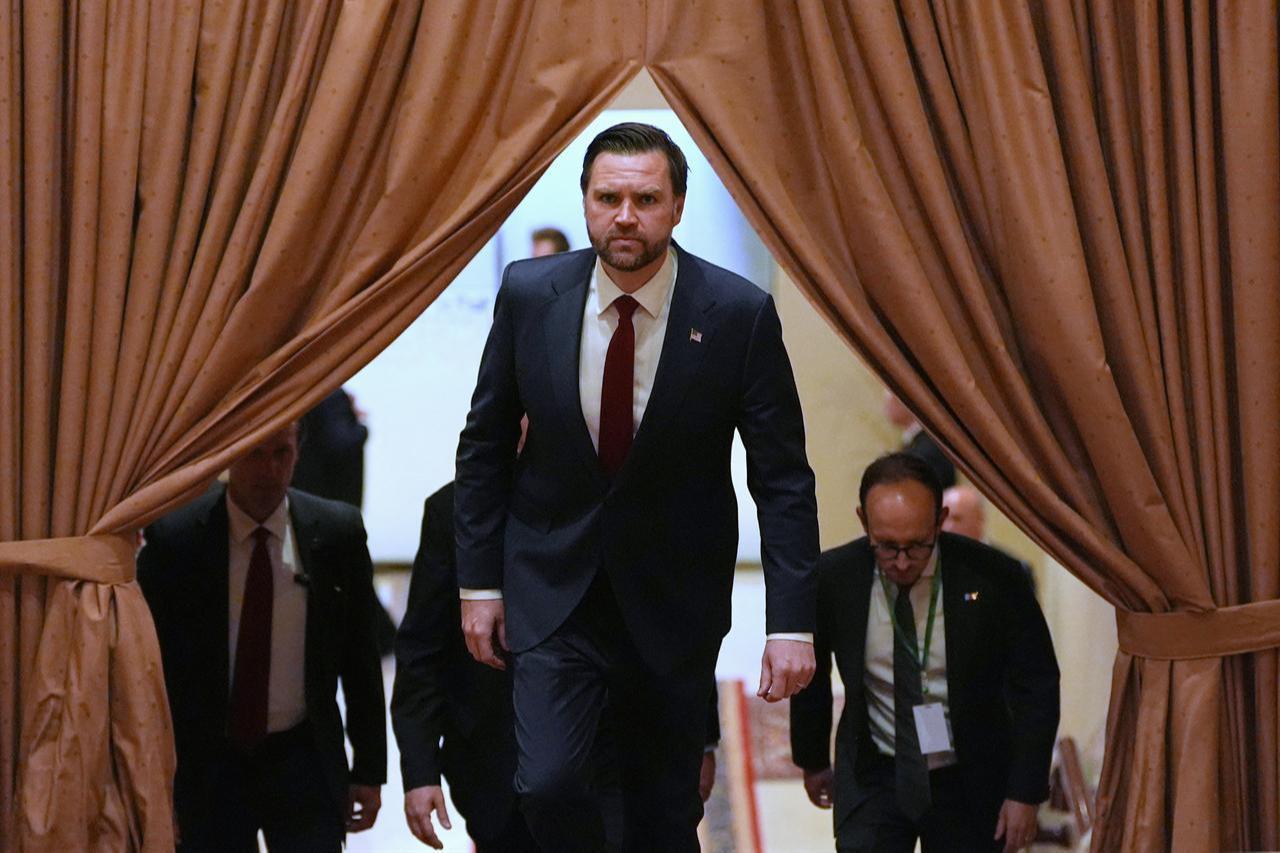
Meanwhile, US Vice President JD Vance said the responsibility for moving forward now lies with Tehran.
“I really think the ball is in the Iranian court, because we put a lot on the table. We actually made very clear what our red lines were,” Vance said in an interview with Fox News on Monday.
Vance, who left the Islamabad talks on Sunday, said he had presented Iran with what he described as the “final and best offer”.
Washington, he said, has “no flexibility” regarding control over Iran’s enriched uranium stockpile and demands a strict verification mechanism to ensure Tehran does not pursue nuclear weapons in the future.
“It’s one thing for the Iranians to say that they’re not going to have a nuclear weapon. It’s another thing for us to put in place the mechanism to ensure that’s not going to happen,” he said.
US President Donald Trump also claimed that Iranian representatives had contacted Washington after the American delegation returned from Islamabad without an agreement.
“I can tell you that we’ve been called by the other side. They’d like to make a deal. Very badly, very badly,” Trump told reporters outside the Oval Office on Monday.
Iran, however, has blamed Washington for making excessive demands.
Still, Tehran has not ruled out further diplomatic efforts. Iranian state television reported that President Masoud Pezeshkian, during a phone call with French President Emmanuel Macron, said Tehran would continue talks only within the framework of international law.
“We have clearly announced the terms of the ceasefire and we will adhere to it,” Pezeshkian said, according to IRIB.
Iranian Foreign Minister Abbas Araghchi also criticised the US position during a call with Saudi Foreign Minister Prince Faisal bin Farhan.
“Unfortunately, we witnessed the continued excessive demands of the American side in the negotiations, which led to the failure to achieve a result,” his ministry quoted him as saying.
Pakistan intensifies diplomatic outreach
Following the Islamabad talks, Pakistan moved quickly to build international support for continued dialogue.
Deputy Prime Minister and Foreign Minister Ishaq Dar has recently held talks with counterparts including Britain’s Yvette Cooper, China’s Wang Yi, Turkiye’s Hakan Fidan, Saudi Arabia’s Prince Faisal bin Farhan, and Egypt’s Badr Abdelatty.
Across these discussions, Pakistan has consistently emphasised that all parties must uphold the ceasefire and that dialogue remains the only viable path forward.
Diplomatic sources said these efforts have helped create a broad, though informal, coalition aimed at sustaining the process and buying time ahead of the April 22 deadline.
The objective is either to secure an extension of the ceasefire or resume technical-level engagement to prepare the ground for a second political round.
Since the first Islamabad talks, intermediaries have continued exchanging messages between the US and Iran on unresolved issues, while pushing for the truce to be extended by at least 45 days.
Although both sides have agreed in principle to continue negotiations, differences remain over the agenda, objectives, format, and venue.
A diplomatic source said Iran favours Islamabad due to its proximity, familiarity, and confidence in Pakistan’s role as mediator.
The US, however, is reportedly considering alternative venues based on logistical and security preferences.
Diplomats believe, however, that the venue is unlikely to become a major obstacle if progress is made on key issues.
Meanwhile, diplomatic activity is also increasing elsewhere, with Russian Foreign Minister Sergei Lavrov arriving in Beijing on Tuesday, shortly after Iranian media reported that he had discussed the crisis with Abbas Araghchi by phone.
Moscow has offered to safely hold Iran’s enriched uranium as part of any potential agreement.