
As conflict in the Middle East rattles global energy markets, Pakistan finds itself facing a difficult choice — whether to shield consumers from soaring fuel prices or maintain the fiscal discipline required under its agreement with the International Monetary Fund (IMF).
Oil markets have remained tense since the outbreak of war involving the United States, Israel and Iran. The crisis has disrupted shipping through the strategically vital Strait of Hormuz, a passage that normally carries about a fifth of the world’s oil supply.
Traffic through the route has slowed dramatically amid heightened security risks and attacks on energy infrastructure across the region. As a result, roughly 15 million barrels of crude oil and another five million barrels of petroleum products are effectively being blocked from reaching global markets each day.
The disruption has forced major Gulf producers — including Saudi Arabia, United Arab Emirates, Kuwait and Iraq — to reduce production as shipments struggle to leave the region. The situation has also led to a buildup of unsold crude and increasing pressure on storage facilities. According to energy consultancy IIR, nearly 1.9 million barrels per day of refining capacity in the Gulf has already been shut down because of the conflict.
With uncertainty growing over how long the war will continue, global oil prices have surged sharply. Analysts warn that if the conflict drags on, prices could climb beyond the highs recorded after the Russian invasion of Ukraine, potentially reaching $150 per barrel.
How countries are reacting
Governments across Asia have rushed to cushion their economies from the shock.
South Korea is considering capping domestic fuel prices for the first time in nearly 30 years and expanding its massive market-stabilisation programme while searching for alternative supply routes. Japan has instructed its national oil reserve authorities to prepare for a possible release of crude.
Meanwhile, Vietnam plans to temporarily remove fuel import tariffs to secure supplies, while Indonesia intends to expand energy subsidies and revive its biodiesel programme. China has directed refiners to pause new fuel export contracts to safeguard domestic supplies, and Bangladesh has introduced fuel rationing measures.
Pakistan has also rolled out emergency energy-saving steps, including a four-day workweek for government offices and a temporary closure of educational institutions. Government employees are working from home on a rotational basis, while the private sector has been encouraged to adopt similar measures.
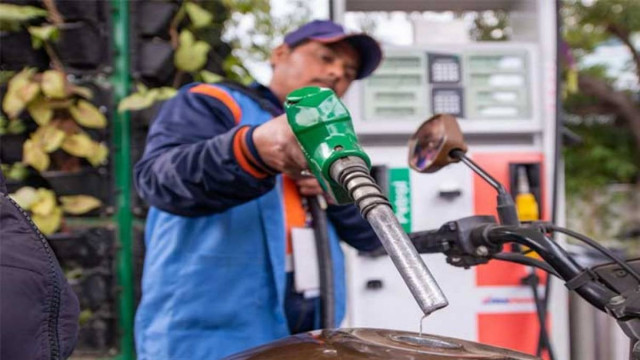
Despite these efforts, Pakistanis have not been spared the impact of rising oil prices. The government last week raised petrol and diesel prices by Rs55 per litre — a move that has significantly increased pressure on households already struggling with inflation.
Higher fuel costs are rapidly pushing up transportation fares, food prices and other everyday expenses. If the Middle East conflict continues, the strain on Pakistan’s fragile economy could deepen further.
The fuel pricing mechanism
The price hike has triggered criticism from economists and policymakers, including former finance minister Miftah Ismail. He argued that the increase effectively transferred about Rs19 billion from consumers to oil companies, raising questions about policy decisions and the influence of the oil industry.
Under Pakistan’s pricing system, domestic fuel prices are calculated using the 15-day average of Dubai and Oman crude oil benchmarks published by S&P Global Platts. The import cost — including freight, insurance and other expenses incurred by Pakistan State Oil — is added to determine the landed price.
The government then applies customs duties, dealer and oil marketing company margins, and the petroleum levy. A freight equalisation margin determined by Oil and Gas Regulatory Authority (Ogra) ensures that fuel prices remain uniform across the country.
Authorities defended the latest increase by citing the sharp surge in global oil prices after the conflict with Iran intensified. Officials feared that expectations of higher prices could lead to hoarding by consumers and fuel suppliers, potentially causing shortages.
To prevent such disruptions, the government shortened the price adjustment cycle from 15 days to seven days so domestic prices could respond more quickly to international fluctuations.
Debate over the policy
Miftah Ismail acknowledged that the government’s concern about hoarding was understandable. However, he argued that domestic fuel prices had already been fixed for the period of March 1–15 based on earlier import costs.
According to him, raising prices midway through that period allowed oil companies to benefit from higher prices despite holding stocks purchased earlier at lower rates.
He suggested that instead of increasing fuel prices, the government could have raised the petroleum levy temporarily. This would have discouraged hoarding while allowing the state to capture additional revenue rather than passing the benefit to oil companies.
Industry experts disagree. Energy specialist Zahid Mir said the rapid surge in international prices changed market dynamics.
After the initial attacks on Iran, global prices jumped sharply when markets reopened. Petrol and diesel prices, which are refined products, tend to move independently of crude prices due to their own supply-demand conditions.
By early March, market expectations suggested domestic fuel prices could rise by as much as Rs100 per litre when the next revision was due.
If local prices failed to reflect rising import costs, importers might slow purchases and petrol stations could hold back supplies, anticipating higher future prices. Such behaviour could quickly trigger fuel shortages.
In this environment, the government moved earlier than usual to adjust prices and prevent disruptions in supply.
IMF pressure and policy constraints
The debate also highlights a broader issue in Pakistan’s energy policy. While many countries allow fuel prices to fluctuate freely with global markets, Pakistan continues to regulate retail prices.
In theory, the petroleum levy was designed to act as a buffer, allowing authorities to reduce taxes when global prices spike and increase them when prices fall. In practice, however, the levy has become an important revenue source for the government.
Maintaining that revenue is crucial for Pakistan to meet fiscal targets under its programme with the International Monetary Fund.
Former Asia Petroleum CEO Khawar Jillani said reducing the levy could have softened the impact on consumers but might have widened the fiscal deficit — something the IMF would likely oppose.
Volatile global markets
Oil prices have swung wildly since the conflict began. Brent crude briefly surged to around $120 per barrel before dropping below $90 and later recovering to near $100.
Much of the volatility has been driven by mixed signals from Donald Trump and other US officials about how long the conflict might last, as well as discussions about releasing strategic oil reserves.
The International Energy Agency has already announced the release of 400 million barrels from emergency reserves — the largest coordinated release in history — to stabilise markets.
However, these global price swings matter less for Pakistan because the country primarily relies on Dubai crude benchmarks rather than Brent.
Those benchmarks paint a more worrying picture. Dubai crude has recently climbed above $134 per barrel, while refined product prices have risen even more sharply. Diesel has surged close to $189 per barrel, dramatically increasing Pakistan’s import costs.
Pakistan produces about 70 per cent of its diesel locally but imports most of its petrol. Supply pressures are already emerging, with Pakistan State Oil reportedly facing difficulties securing diesel cargoes as shipping premiums surge.
What lies ahead
Energy experts warn that as long as disruptions continue in the Strait of Hormuz, Asian economies will face persistent supply risks and volatile prices.
Even if the conflict ends quickly, it could take weeks for shipping routes and supply chains to stabilise.
For Pakistan, the next fuel price review will once again test the government’s balancing act — protecting consumers from rising costs while meeting fiscal commitments and keeping fuel supplies flowing.