
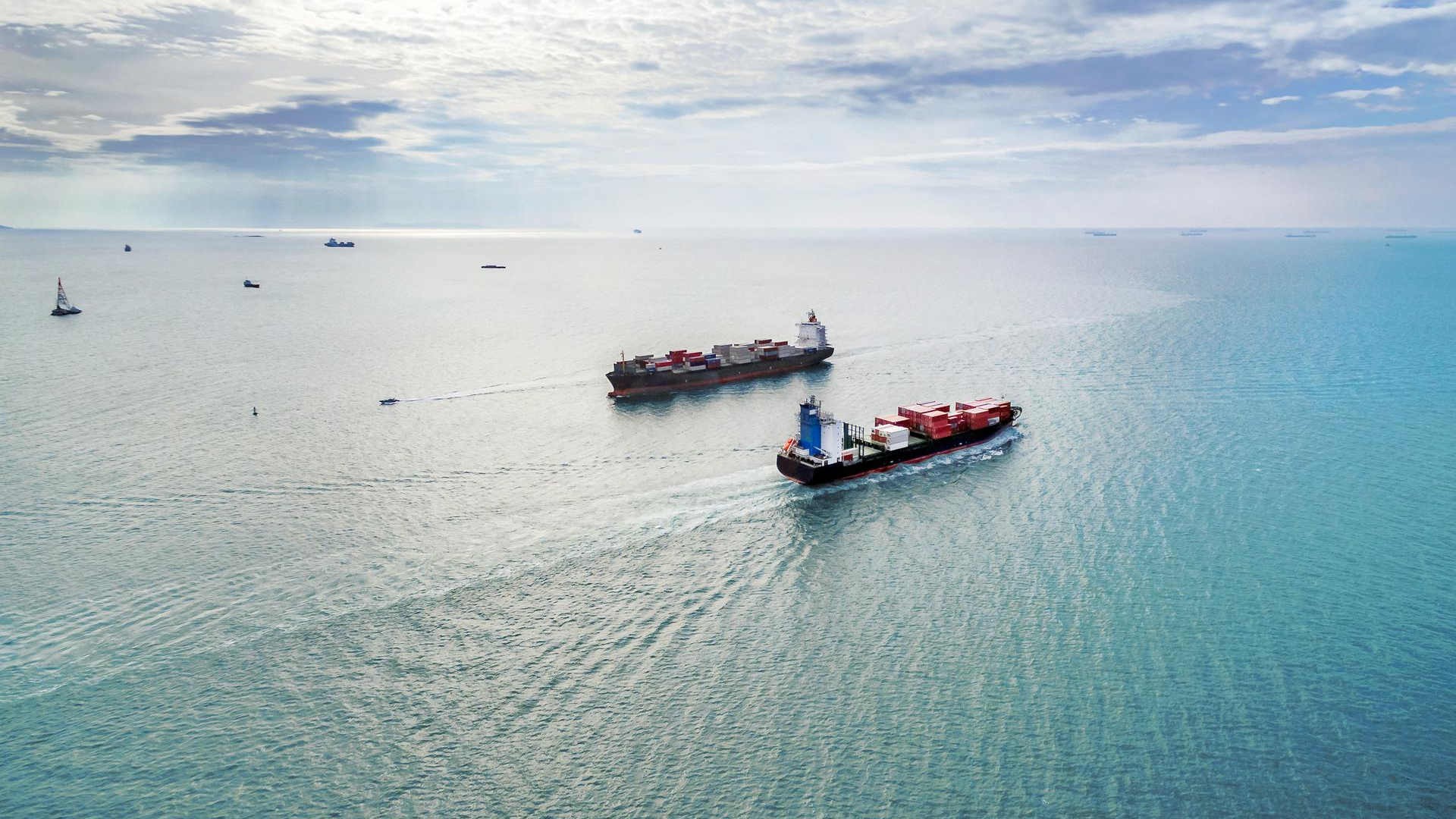
DUBAI / TEHRAN: Escalating hostilities in the Middle East intensified on Wednesday as Iran launched attacks on Israel and other regional targets while several commercial ships were struck near the strategic Strait of Hormuz, raising fears of disruptions to global energy supplies.
At least three vessels were hit by projectiles in the Gulf, highlighting Tehran’s ability to retaliate despite intensified strikes by the United States and Israel.
The United States warned that Iran could attempt to mine the waters of the Strait of Hormuz — a crucial shipping route through which roughly one-fifth of the world’s oil passes. The US military said it had destroyed 16 Iranian boats believed to be involved in laying mines near the strait and released footage showing the vessels being struck by missiles.
Washington also cautioned civilians in Iran to stay away from port facilities in the strait, claiming Iranian naval forces were using them for military purposes.
US President Donald Trump warned on social media that any mines placed in the strait must be removed immediately, threatening severe military consequences otherwise.
Reports suggested Iran had deployed several mines in the waterway, though sources said their exact locations were largely known. The US has floated the idea of escorting commercial tankers through the strait, but officials later acknowledged that an earlier announcement about the first such escort was inaccurate.
Meanwhile, French President Emmanuel Macron said he had no confirmation that mines had been deployed. Speaking after talks with G7 leaders, he said US and Israeli strikes had weakened Iran’s military capabilities but had not eliminated them entirely.
Ships targeted in Gulf
Several commercial vessels reported damage after projectile attacks.
Thailand-flagged bulk carrier Mayuree Naree was struck about 11 nautical miles north of Oman, triggering a fire and forcing the crew to abandon ship, according to its owner Precious Shipping.
Japan-flagged container vessel One Majesty suffered minor damage after being hit 25 nautical miles northwest of Ras Al Khaimah in the UAE.
Another vessel, the Marshall Islands-flagged bulk carrier Star Gwyneth, was also damaged about 50 nautical miles northwest of Dubai, maritime risk firm Vanguard reported.
Iran said it targeted ships that entered the strait despite warnings from the naval forces of the Islamic Revolutionary Guard Corps (IRGC). Oman’s navy rescued 20 crew members from the damaged vessels, while three others remained missing.
Rising casualties
According to a tally by Al Jazeera, nearly 1,900 people have been killed across the Middle East since the conflict escalated. The deaths include over 1,200 in Iran, about 570 in Lebanon, 13 in Israel and eight US soldiers.
The Pentagon also confirmed that around 140 US service members had been injured during the first 10 days of the campaign, though most sustained minor injuries. Eight troops remain in serious condition.
Iran leadership update
Reports circulating about an injury to Iran’s new Supreme Leader Mojtaba Khamenei were dismissed by officials. Yousef Pezeshkian, an adviser to the government and son of President Masoud Pezeshkian, said Khamenei was “safe and sound”.
Continued strikes across region
Israel launched fresh air strikes on Tehran and Beirut on Wednesday. The Israeli military said the attacks targeted facilities linked to the Iranian government.
Live footage showed heavy smoke rising from Beirut’s southern suburbs following the strikes.
Iran’s Revolutionary Guards responded by launching what they described as the 37th wave of missile and drone attacks against Israel. Iranian media reported that the barrage targeted major cities including Tel Aviv, Jerusalem and Haifa and lasted several hours.
Israeli media said several people were injured in a missile strike near Tel Aviv.
Gulf states on alert
The conflict also spilled over into Gulf countries. Authorities in Dubai reported drones falling near the city’s airport, injuring four people. Oman said drones struck fuel storage tanks at Salalah port.
Saudi Arabia said its air defence systems intercepted multiple drones and ballistic missiles targeting locations including Prince Sultan Air Base and the Shaybah oil field.
Iranian forces also claimed to have fired ballistic missiles at the base of the US Navy’s Fifth Fleet in Bahrain and at several US-linked facilities in Iraqi Kurdistan.
The UAE reported that its air defence systems intercepted incoming missiles and drones, while Kuwait said it had shot down eight drones approaching key sites.
Qatar’s defence ministry also confirmed it had intercepted a missile attack, later stating that the security threat had been neutralised and the situation had returned to normal.