
• Officials say extending ceasefire is the immediate priority, with both sides urged to prolong truce by 45 days; Tehran favours Islamabad for next talks
• PM tells cabinet ceasefire remains under strain but intact; says efforts underway to overcome key hurdles
ISLAMABAD: Diplomatic efforts are underway to arrange a second round of dialogue between Iran and the United States as Pakistan, regional capitals, and major global powers step up attempts to prevent the fragile peace process from collapsing into renewed conflict, diplomats said on Monday.
Officials familiar with ongoing back-channel contacts told Dawn that mediators are actively working to bring Tehran and Washington back to the negotiating table. Pakistan is playing a central role in these efforts, with support from Turkiye and Egypt. According to sources, the immediate focus is securing an extension of the ceasefire.
Prime Minister Shehbaz Sharif, while addressing a federal cabinet meeting, said the truce was holding despite facing pressure.
“For 21 hours, direct talks were held in Islamabad. I witnessed it myself. We worked day and night. The ceasefire is still in place. There are a few hurdles, and efforts are being made to resolve them,” he said, adding that Pakistan’s leadership had worked tirelessly to facilitate the negotiations.
The prime minister conveyed a similar message during his conversation with Japanese Prime Minister Sanae Takaichi, assuring her that Pakistan would continue working to preserve the ceasefire. The Japanese leader appreciated Islamabad’s role and expressed support for the ongoing peace efforts.
The ceasefire between the US and Iran, brokered on April 7 after weeks of hostilities, is due to expire on April 22. Although it technically remains in effect, diplomats describe the situation as increasingly fragile. Tensions have risen after the United States moved towards enforcing a naval blockade in the Strait of Hormuz, prompting Tehran to warn that such a move would violate the terms of the ceasefire.
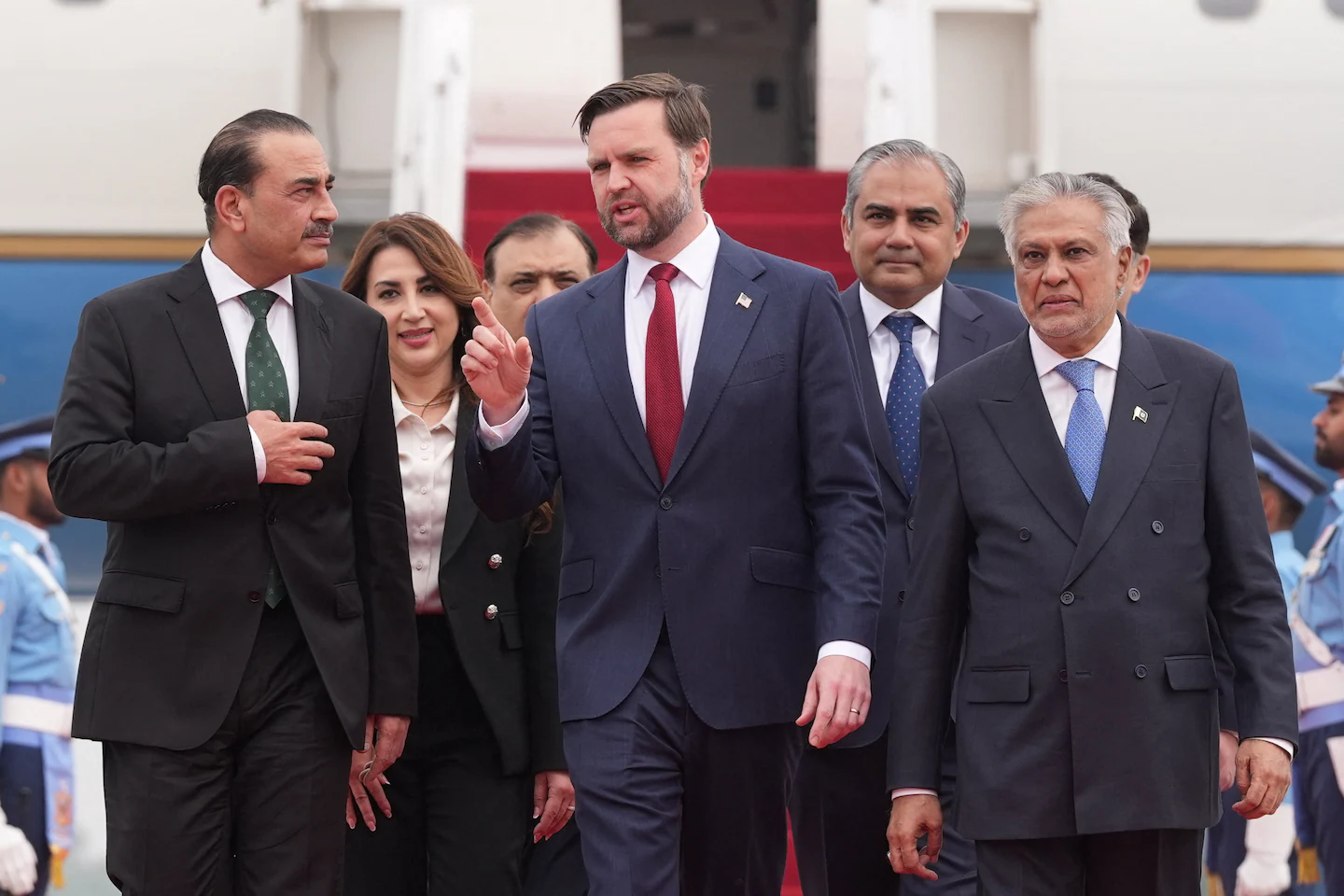
The Islamabad talks — the highest-level engagement between the two countries since 1979 — concluded without a formal agreement but also without a collapse in dialogue. Delegations held discussions through multiple channels, including direct meetings and expert-level sessions. Diplomats say the absence of a breakthrough has left only a narrow but significant diplomatic opening.
At the heart of the deadlock are deep structural differences. Washington is seeking long-term commitments on Iran’s nuclear programme, including limits on uranium enrichment, safeguards against weaponisation, and guarantees of unrestricted navigation through the Strait of Hormuz.
Iran, meanwhile, insists on recognition of its sovereign rights under international legal frameworks, particularly the Nuclear Non-Proliferation Treaty (NPT), along with comprehensive sanctions relief and credible guarantees before taking any irreversible steps.
The sequence of concessions remains one of the major sticking points. The US wants Iranian commitments first as a basis for a broader settlement, while Tehran argues that trust-building measures and guarantees must precede any concessions. Diplomats said this disagreement has kept both sides trapped in a circular stalemate.
The Strait of Hormuz has emerged as one of the most contentious issues. While the US delegation stressed the need for free and secure maritime passage, Iran views control over the waterway as a crucial element of its post-war leverage. The recent naval build-up following the Islamabad talks has added urgency to diplomatic efforts, with fears that any miscalculation at sea could quickly derail the ceasefire.
Push for further talks
Following the conclusion of talks in Islamabad, Pakistan moved swiftly to gather international support for continued dialogue. Deputy Prime Minister and Foreign Minister Ishaq Dar held a series of calls with key counterparts, including Britain’s Yvette Cooper, China’s Wang Yi, Turkiye’s Hakan Fidan, Saudi Arabia’s Prince Faisal bin Farhan, and Egypt’s Badr Abdelatty.
During these discussions, Pakistan consistently stressed that all parties must uphold the ceasefire and that dialogue remains the only viable path to peace. International partners reportedly responded positively.
In his conversation with Mr Dar, Chinese Foreign Minister Wang Yi emphasised that the priority must be to prevent the conflict from reigniting and to preserve the fragile momentum created by the ceasefire. He urged the international community to support diplomatic efforts and oppose any actions that could escalate tensions.
Diplomatic sources said these engagements have helped build a broad, though informal, coalition aimed at sustaining the peace process and buying time ahead of the April 22 deadline.
The immediate objective is either to secure an extension of the ceasefire or resume technical-level engagement to prepare the ground for a second political round of talks. Since the Islamabad meeting, intermediaries have continued exchanging messages between Washington and Tehran on unresolved issues, while pressing both sides to extend the truce by at least 45 days.
Although both countries have agreed in principle to continue negotiations, differences remain over the agenda, objectives, format, and venue of the next round.
A diplomatic source said Iran prefers Islamabad as the location for future talks, citing its proximity, familiarity, and confidence in Pakistan’s role as mediator.
The United States, however, is reportedly considering alternative venues, reflecting differing views on the negotiating environment, logistics, and security concerns. Despite this, diplomats believe the venue itself is unlikely to become a major obstacle if meaningful progress is made on core issues.
The broader regional situation also continues to cast a shadow over the process. Contrary to expectations, the ceasefire in its current form does not fully cover all theatres, particularly Lebanon. While hostilities have eased overall, the Lebanese front continues to shape Iran’s strategic calculations.