
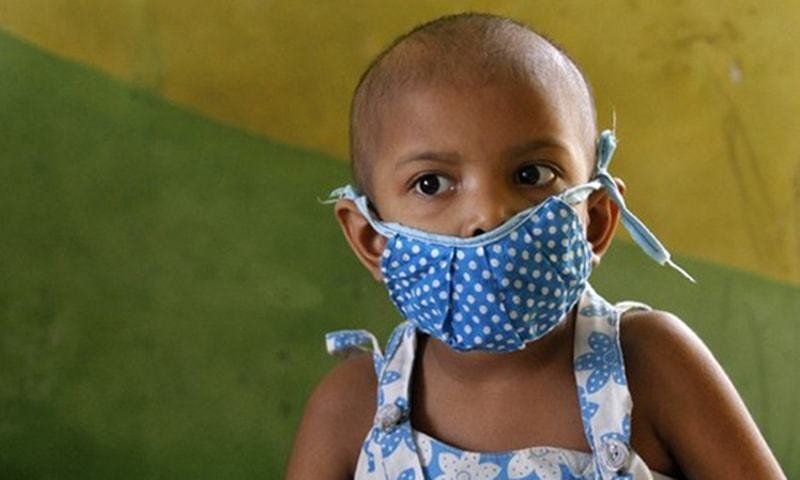
Ten-year-old Ashfaq, one of ten siblings from Sindh’s Ghotki district, once found his childhood overshadowed by a life-threatening illness. In June 2023, at just eight years old, he was brought to the National Institute of Child Health (NICH) in Karachi in critical condition. Feverish, severely anaemic and struggling to breathe, he could no longer walk due to intense bone pain.
He was admitted to the paediatric oncology department at NICH, operated in collaboration with the Child Aid Association. After weeks of unexplained suffering, tests confirmed the diagnosis: acute lymphoblastic leukaemia (ALL), an aggressive but treatable form of blood cancer. For his family, the news was devastating — they had never imagined cancer could strike a child.
Ashfaq’s case reflects a broader crisis. Each year, about 10,000 children in Pakistan are diagnosed with cancer, yet fewer than half receive adequate treatment. Globally, around 400,000 children are diagnosed annually, according to the World Health Organization. While survival rates exceed 80 percent in high-income countries, they fall below 30 percent in many low- and middle-income nations, including Pakistan.
Leukaemia accounts for nearly 30 percent of childhood cancer cases in Pakistan. With modern therapies, ALL can have cure rates of up to 80 percent, but access to treatment remains a major obstacle. The country currently has only eight paediatric oncology centres and two cancer registries — in Karachi and Lahore — that record both adult and paediatric cases together.
In October 2025, the Pakistan Society of Paediatric Oncology launched a national childhood cancer registry to improve data collection, diagnosis and survival outcomes. That same year, Pakistan joined the Global Platform for Access to Childhood Cancer Medicines, an initiative co-founded by the World Health Organization and St. Jude Children’s Research Hospital. The platform aims to raise survival rates in participating countries from 30 percent to 60 percent by 2030.
For Ashfaq, survival depended not only on medical care but also on social support. His treatment required months of chemotherapy in Karachi. Initially, his father — a farm labourer — hesitated to stay due to financial constraints. Without assistance, the cost of treatment would have exceeded Rs1 million. Through counselling and financial support provided under the public-private partnership model, the family agreed to continue.
After completing his chemotherapy, Ashfaq went into remission. Today, he has returned to Ghotki, back in school and playing with his siblings — milestones that once seemed out of reach.
Yet his recovery is not the norm. In many low- and middle-income countries, limited healthcare facilities, financial hardship and high treatment abandonment rates continue to undermine survival. Delayed diagnoses and interrupted therapies cost countless young lives.
Ashfaq’s story is both a warning and a source of hope. It demonstrates that childhood cancer is treatable — even curable — when timely, comprehensive care is available. The challenge lies not in medical possibility, but in ensuring that every child reaches treatment in time.
The writer heads the paediatric oncology department at NICH Karachi and serves as chief oncologist at the Child Aid Association.