
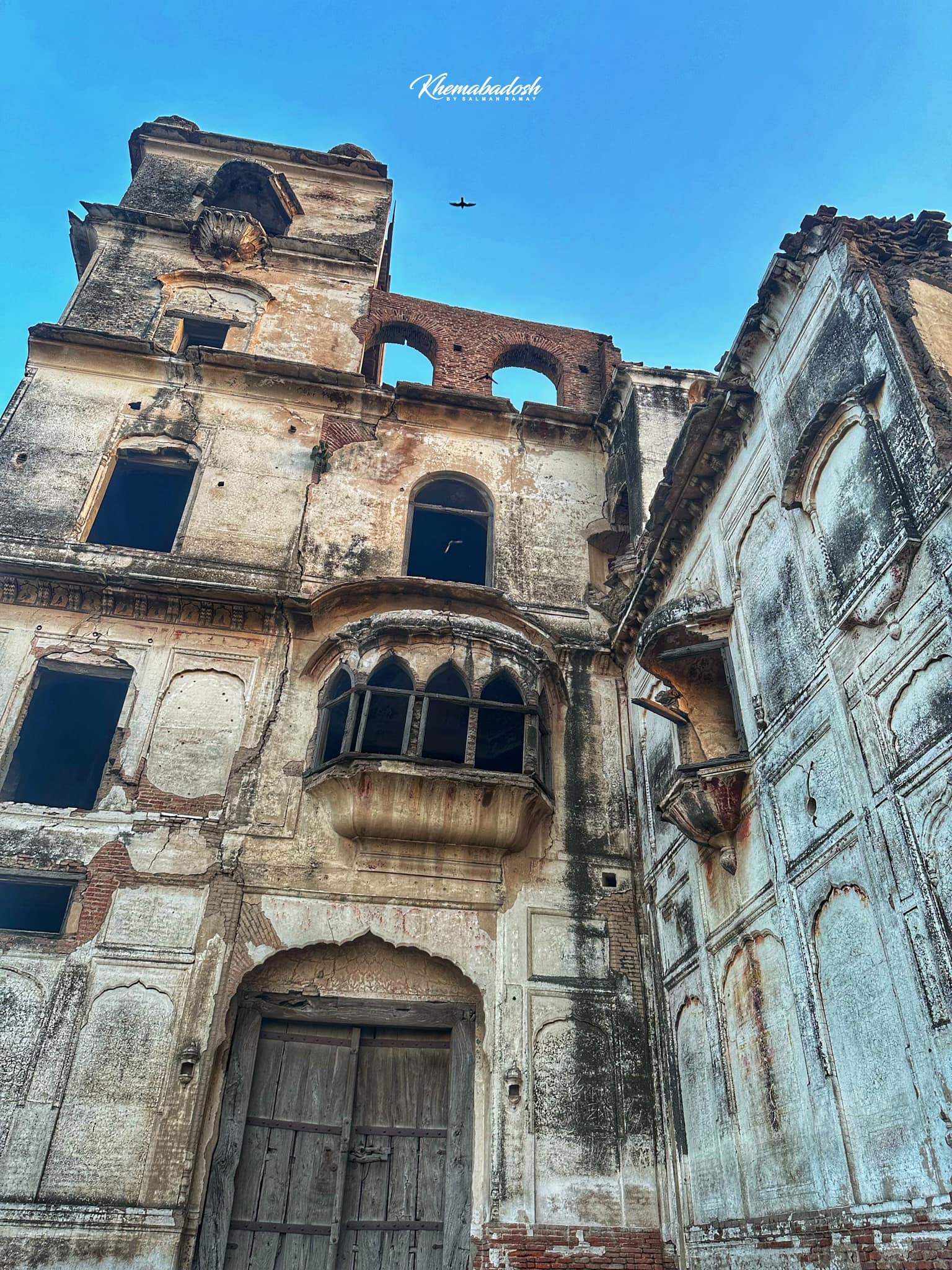
ISLAMABAD: Just days after the demolition of a World War I memorial in the federal capital, the remains of a Mughal-era structure have also been cleared to facilitate a private housing scheme.
The 16th-century building stood about 200 metres from the British-era obelisk at an archaeological site in Rehara village. Developers recently razed the World War I memorial at the same location to pave the way for construction.
According to the Department of Archaeology and Museums (DOAM), the structure is believed to date back to the reign of Mughal Emperor Akbar and was considered the oldest surviving ruin in the area.
A DOAM official said the demolition included the building’s above-ground arch (façade) and the main chamber measuring approximately 8 by 4.5 metres, with walls 1.5 metres thick. Built from limestone and sandstone blocks, the structure required careful excavation and preservation. A departmental team visiting the site later found that the remains — previously visible in photographs — had been completely removed.
Documents reviewed by Dawn show that DOAM had repeatedly written to the Capital Development Authority (CDA), a development partner in the housing scheme, seeking records to help safeguard the war memorial and other historical sites, including the Mughal-era structure in Rehara. Officials said the department had been corresponding with the CDA’s revenue wing since 2020 but had received no response.
An official from the Ministry of National Heritage and Culture claimed that the CDA failed to reply to multiple letters sent over the past six years. When contacted, CDA spokesperson Shahid Kiyani initially requested time to respond but did not provide any further comment.
Several DOAM officials declined to speak on record. However, a senior official, speaking on condition of anonymity, said a report detailing the destruction of the monuments had been forwarded to the Prime Minister’s Office.
Meanwhile, DOAM revised its earlier stance regarding the World War I memorial, stating that it was not protected under the Antiquities Act 1975 and therefore did not require a no-objection certificate (NOC) for demolition. Previously, the department had maintained that it had not authorised the CDA to dismantle the monument.
In a statement, DOAM said that although the memorial was located within the Islamabad Capital Territory, efforts had been underway to grant it formal protection. However, due to financial and legal constraints, the site could not be officially notified as protected.
The department stressed that the memorial carried cultural and historical significance and that any intervention should have been undertaken with due care and conservation sensitivity. It added that the monument should ideally be re-erected at its original site in Rehara village with appropriate dignity and respect.