
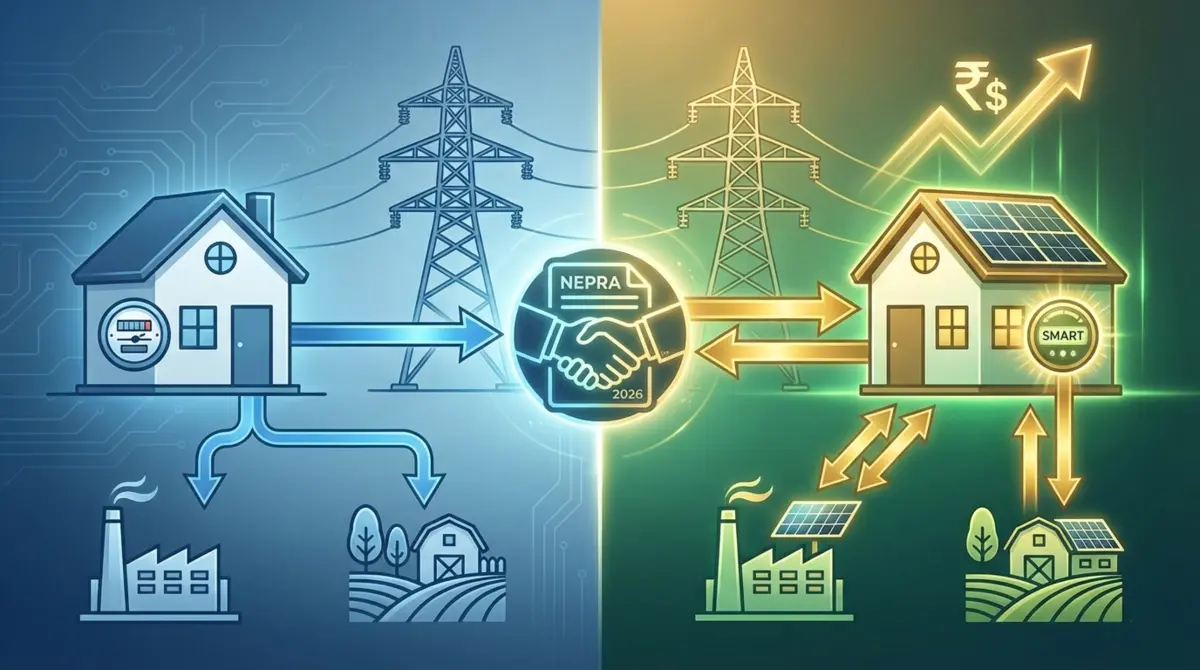
ISLAMABAD: The National Electric Power and Regulatory Authority (Nepra) faced sharp criticism on Monday after altering the country’s net metering policy, with members of the National Assembly Standing Committee on Industries and Production questioning the rationale behind the move and warning it could undermine investor confidence and hinder the clean energy transition.
During a meeting chaired by Syed Hafeezuddin of the MQM, lawmakers and government officials voiced strong reservations over the shift from net metering to net billing.
Earlier this month, Nepra revised the contractual terms for both existing and future net-metered solar consumers, citing concerns over the rapid growth of rooftop solar installations and the financial strain on the state-owned power distribution network.
The committee chairman cautioned that the abrupt policy change could damage the government’s credibility. He argued that if commitments to independent power producers are honoured, similar assurances should be extended to industries and individuals who invested in solar systems under the previously announced net metering framework.
Mr Hafeezuddin noted that many industrial units had adopted solar energy based on the government’s policy, only to find themselves disadvantaged by the introduction of net billing. Committee members, along with the industries secretary, warned that such reversals risk eroding trust in government policies and discouraging investment in clean technologies.
The panel observed that Nepra’s justification for the change did not appear to be backed by a comprehensive or rational study conducted by the power ministry. Emphasising the need for sustainable solutions, the chairman said promoting solar and other renewable energy sources would help lower long-term business costs and strengthen Pakistan’s industrial competitiveness.
Development projects scrutinised
The committee also reviewed ongoing development projects under the Ministry of Industries and Production. After detailed scrutiny, several proposals were rejected, with members seeking monitoring reports from the Planning Commission. Delays and cost overruns drew particular concern.
Dr Mehreen Bhutto pointed out that while factors such as the Covid-19 pandemic, currency volatility and political changes may have contributed to setbacks, most projects had been delayed by six to nine years. She criticised the briefing documents presented to lawmakers as incomplete and lacking essential details.
Other members, including Abdul Hakeem Baloch and Shahid Usman, challenged the ministry’s claims regarding projects in Hub, Karachi and Gujranwala, saying field realities differed from official accounts. The chairman reprimanded officials, stating that on-ground conditions did not match the information provided to the committee.
Dr Bhutto further highlighted the absence of clear financial figures in project summaries, noting that amounts were not specified in millions or billions of rupees.
Lawmakers also questioned why departments preferred acquiring new land and constructing new buildings rather than utilising properties owned by non-functional state-owned enterprises. “It is understandable why the SOEs are making losses,” Mr Hafeezuddin remarked.
The panel additionally discussed the case of Engineer K.B. Ali, a former employee of the Engineering Development Board, who has secured a stay order from the court after being transferred back to his parent department.