
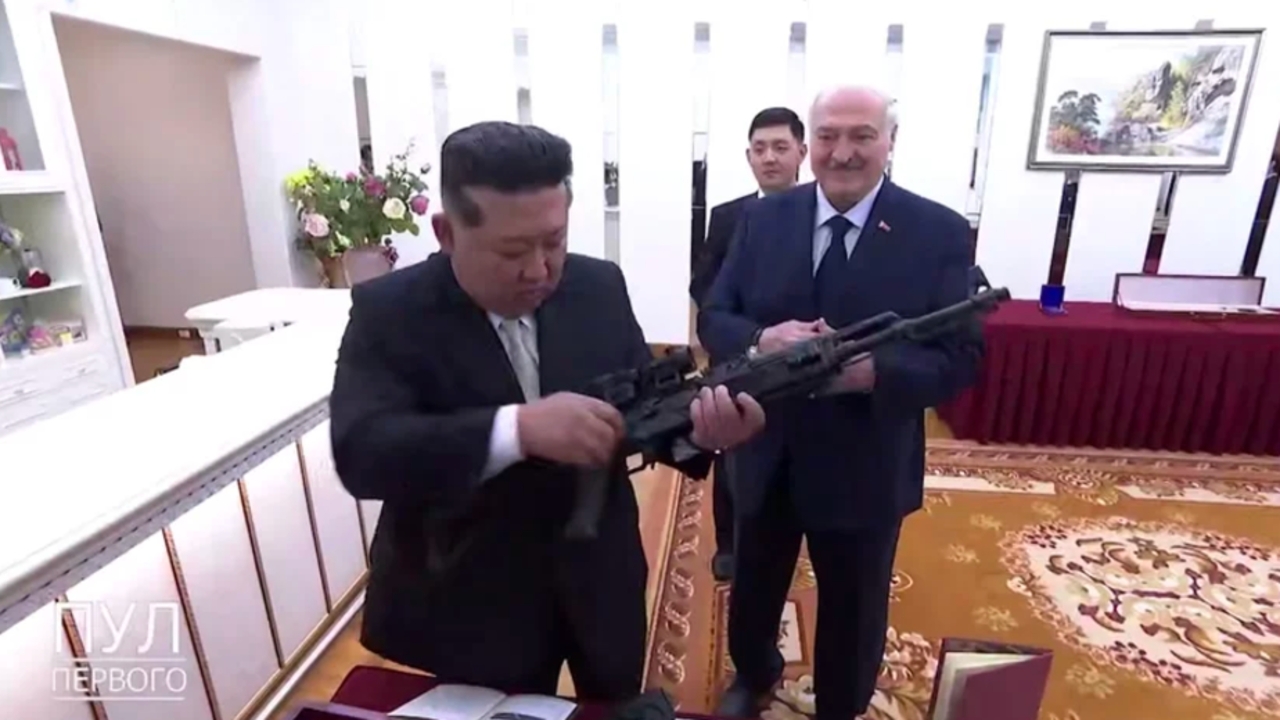
Kim Jong Un rolled out a grand استقبال for Alexander Lukashenko in Pyongyang, where the two leaders signed a “friendship and cooperation” treaty during Lukashenko’s first official visit to the country.
Both nations — long under Western sanctions and frequently criticised over human rights — reaffirmed their alignment, particularly in the context of global geopolitical shifts. The leaders had previously met in China last year.
Speaking during the visit, Lukashenko emphasised the need for closer coordination among “independent countries” to safeguard sovereignty and counter what he described as violations of international law by major powers. Kim, in turn, voiced support for Belarus against what he called “illegitimate Western pressure,” backing Minsk’s efforts toward political and economic stability.
North Korea’s state media confirmed the signing of the treaty, describing it as a formal step toward strengthening bilateral ties. Lukashenko’s استقبال included an elaborate ceremony featuring an artillery salute, marching troops, and cheering crowds.
During the trip, Lukashenko also visited the Kumsusan Palace of the Sun to pay tribute to Kim’s late father and grandfather. He additionally laid flowers on behalf of Vladimir Putin, highlighting Minsk’s close ties with Moscow.
Both Belarus and North Korea have supported Russia’s war in Ukraine — with Belarus serving as a staging ground for the 2022 invasion, and North Korea reportedly supplying troops and military equipment. Estimates suggest thousands of North Korean soldiers have been deployed, particularly in Russia’s Kursk region.
The growing alignment fits into a broader effort led by Xi Jinping and Putin to promote a “multipolar world” aimed at challenging Western dominance. In 2024, Russia and North Korea signed a strategic partnership agreement committing both sides to provide assistance in case of an attack.
Analysts believe Pyongyang has benefited from this relationship through financial aid, military technology, and energy supplies from Russia, reducing its dependence on China.
Meanwhile, Donald Trump has attempted to re-engage Belarus during his second term, easing some sanctions and inviting the country into his proposed “Board of Peace.” Trump, who met Kim three times during his first presidency, may seek renewed talks, especially with a planned visit to China in May.
Beyond political alignment, both countries also discussed expanding cooperation in sectors such as agriculture, trade, and technology. Belarusian Foreign Minister Maxim Ryzhenkov said trade remains limited but holds potential, including Belarus exporting food and pharmaceuticals, while importing North Korean consumer goods like cosmetics.
Experts say the visit is meant to signal unity among nations opposing Western influence, with Pyongyang aiming to boost its diplomatic standing and strengthen ties within an emerging anti-Western bloc.