
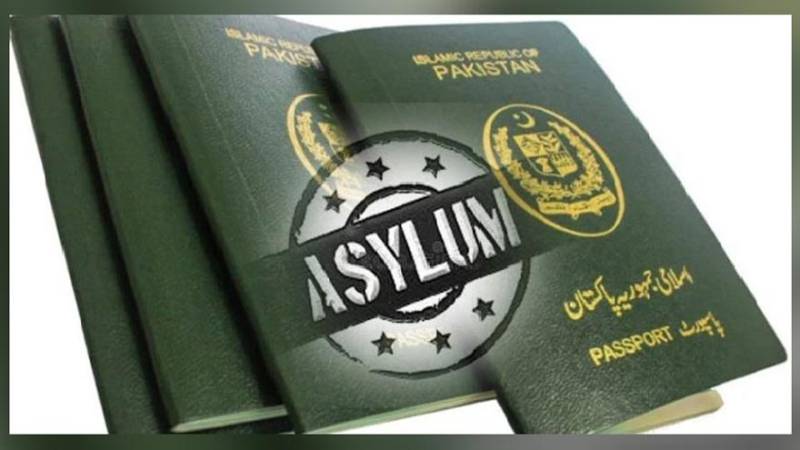
• Islamabad avoids visa restrictions so far due to cooperation with UK
• Around 70pc of asylum claims by Pakistanis rejected, but deportations remain low
• UK opposition demands stricter policies
LONDON: Pakistan has come under increased scrutiny in the United Kingdom as British authorities intensify efforts to curb what they describe as the misuse of the asylum system.
The attention follows the UK government’s decision to impose visa restrictions on several countries experiencing a sharp rise in asylum claims from people who initially entered through legal routes.
In what officials described as an unprecedented move, the UK Home Office recently introduced an “emergency brake” on visas for nationals of four countries. Sponsored student visas for citizens of Afghanistan, Cameroon, Myanmar and Sudan have been suspended, while skilled worker visas for Afghan nationals have also been halted.
During a recent briefing, a journalist asked UK Home Secretary Shabana Mahmood why Pakistan had not yet been included in the list of countries facing visa restrictions, noting that Pakistanis represent the largest group of individuals who enter the UK legally and later apply for asylum.
The question also highlighted the low number of deportations of rejected Pakistani asylum seekers.
Responding to the query, Mahmood said the measures announced were only the beginning of the government’s efforts to address the issue. However, she declined to confirm whether similar visa restrictions were being considered for other countries.
Pakistan ‘cooperating’
Sources in both the Pakistani and British governments told Dawn that Islamabad has been cooperating with UK authorities regarding the return of rejected asylum seekers.
However, officials said the number of Pakistanis who enter the UK on student visas and later seek asylum has risen significantly, raising concerns among British authorities.
According to the sources, ongoing cooperation between the two governments may be one of the reasons Pakistan has not yet faced visa restrictions.
Official data shows that Pakistani nationals now make up the largest group of asylum applicants in the UK, accounting for roughly 10 per cent of all claims.
In 2024, a total of 10,638 Pakistanis applied for asylum — nearly twice the number recorded the previous year and more than applicants from countries such as Eritrea, Iran and Afghanistan.
Many of these applicants initially arrive through legal channels, including student, work or visitor visas, before submitting asylum requests.
High rejection rate
Government statistics indicate that more than 70 per cent of asylum claims made by Pakistani nationals are rejected.
Despite the high rejection rate, deportations remain limited. Home Office figures show that in 2025, around 10,853 Pakistani asylum applications were refused, but only 445 individuals were deported back to Pakistan — about 4.1 per cent of rejected applicants.
British officials say countries that do not cooperate in accepting deported citizens could face penalties such as suspension of priority visa services or wider visa restrictions affecting tourists, students and workers.
A UK government source told British media that authorities would consider visa sanctions against countries that fail to take back their nationals.
The issue has also sparked political debate in Britain.
Chris Philp, the shadow home secretary, criticised the low deportation rate and described it as “pathetic”. He pointed out that a returns agreement with Pakistan had been signed in 2022 when Priti Patel served as home secretary.
Philp argued that stronger measures were needed, suggesting the UK should significantly reduce visas issued to Pakistani nationals and reconsider its commitments under the European Convention on Human Rights to enable faster deportations.