
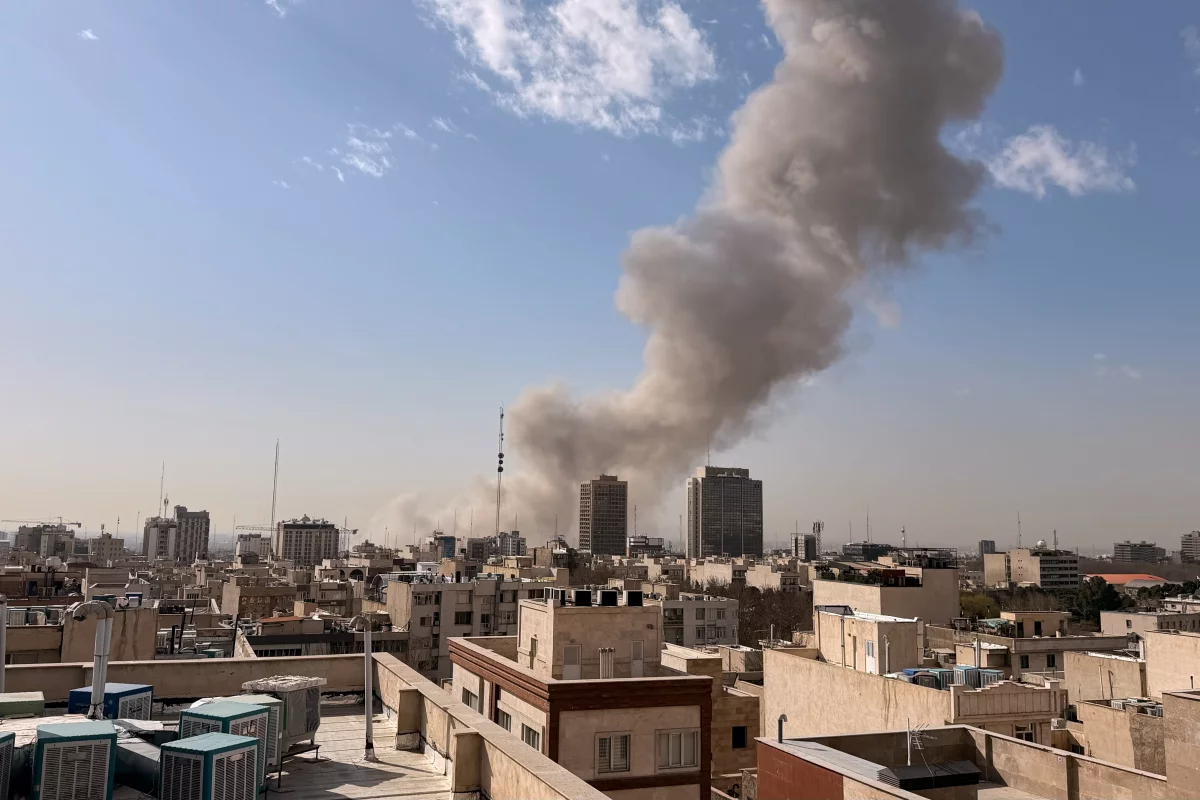
Inside the White House, a tense debate is shaping US President Donald Trump’s public stance on the ongoing Iran war, as aides and advisers weigh how and when to declare victory while the conflict continues to escalate across the Middle East.
Officials warn that surging gasoline prices could have political repercussions from the US-Israeli strikes on Iran, while hawkish voices urge Trump to maintain military pressure on Tehran, according to interviews with aides and sources close to the administration.
This internal tug-of-war reflects the high stakes of the conflict, which is the largest US military operation since the 2003 Iraq war. Trump, who returned to office promising to avoid prolonged interventions, has shifted his rhetoric over the past two weeks, framing the campaign as a limited operation while claiming objectives have largely been met.
Yet his public statements have been inconsistent. At a rally in Kentucky, he declared, “we won,” only to immediately add, “we don’t want to leave early… we’ve got to finish the job.” Energy markets have reacted sharply to these mixed messages, swinging up and down in response.
Economic advisers, including officials from the Treasury Department and National Economic Council, have cautioned Trump that an oil shock and rising gasoline prices could weaken domestic support for the campaign. Political aides, including Chief of Staff Susie Wiles and deputy James Blair, have pushed for messaging that emphasizes a limited, nearly completed operation to reassure voters.
Hawkish figures, including Senators Lindsey Graham and Tom Cotton, along with media commentators, argue that the US must continue operations to prevent Iran from obtaining a nuclear weapon and respond decisively to attacks on US forces and shipping.
Meanwhile, Trump’s populist base, including strategist Steve Bannon and TV personality Tucker Carlson, urges him to avoid a prolonged Middle East entanglement. Trump appears to be managing these conflicting expectations—signaling hawks that the campaign continues, markets that it could end soon, and his base that escalation will be limited.
The White House press secretary Karoline Leavitt dismissed reports based on anonymous sources, saying Trump “is the final decision-maker and his own best messenger” while his team focuses on achieving the objectives of Operation Epic Fury.
Searching for an exit
Trump’s administration has offered shifting explanations for the war—from preventing an imminent Iranian attack to crippling Iran’s nuclear program to regime change. The president is now attempting to balance competing narratives, reassure volatile energy markets, and contain rising gas prices while seeking a conclusion that can be framed as a military success, even if Iran’s leadership survives and parts of its nuclear infrastructure remain intact.
US and Israeli airstrikes have reportedly killed key Iranian leaders, destroyed ballistic missile arsenals, sunk naval assets, and weakened Iran’s proxy networks. Yet Iran has retaliated by targeting oil tankers and transport facilities in the Gulf, driving up global oil prices and complicating Trump’s messaging.
The Strait of Hormuz, through which a fifth of the world’s oil shipments normally pass, has been nearly blocked by Iran, and attacks in the region have heightened economic pressure on the US. Analysts say high gasoline prices could force Trump to conclude the conflict ahead of the November midterm elections to protect his party’s narrow congressional majorities.
Trump’s administration has also learned that the Iran campaign would not unfold like the quick US operation in Venezuela, which resulted in a rapid capture of President Nicolas Maduro’s influence over the country’s oil reserves. Iran, by contrast, is heavily armed with a deeply entrenched political and military structure.
While Trump has claimed that US-Israeli strikes have destroyed Iran’s nuclear program, experts note that much of Iran’s highly enriched uranium is buried and potentially retrievable, and Iran denies pursuing nuclear weapons.
If the war continues, rising casualties and economic costs could weaken domestic support, though so far Trump’s “Make America Great Again” base remains largely aligned with his Iran strategy, giving him some political flexibility as the conflict evolves.