
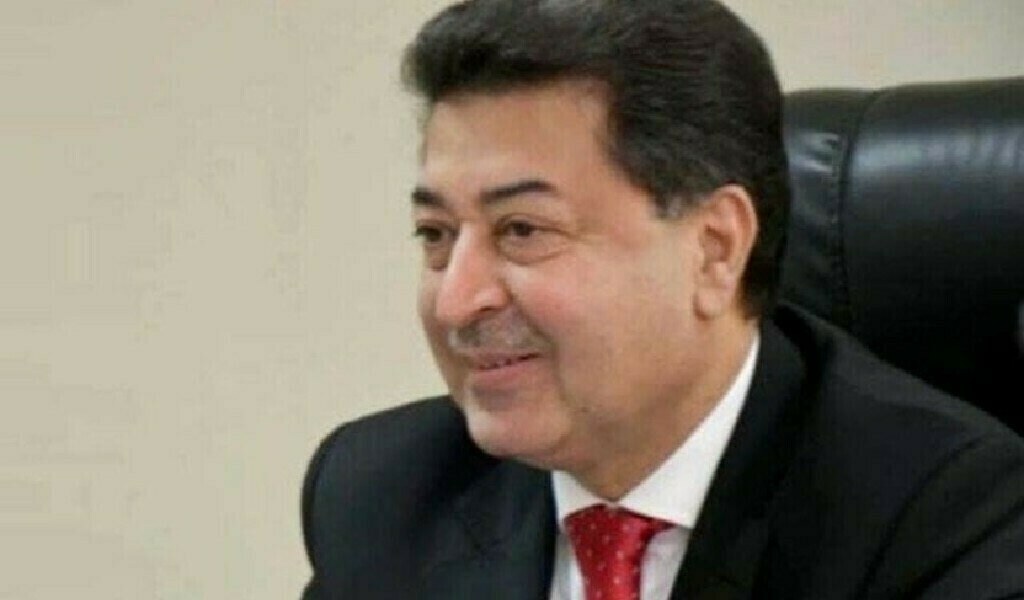
• Raja, two ECP members continue in office a year after their terms expired
• Notification of NA opposition leader removes a major procedural obstacle
• Civil society urges immediate start to appointment process
ISLAMABAD: Chief Election Commissioner Sikandar Sultan Raja and two other members of the Election Commission of Pakistan (ECP) are completing a full year in office beyond the expiry of their constitutionally mandated five-year terms, underscoring the absence of a timely succession plan for key electoral posts.
The terms of the three officials ended on Jan 26, 2025. Under Article 215(4) of the Constitution, fresh appointments were required within 45 days of the posts falling vacant — by March 12, 2025. However, a proviso added to Article 215(1) through the 26th Constitutional Amendment allows the chief election commissioner and ECP members to continue in office until successors are appointed. The incumbents remain in place under this provision, while the process for new appointments has yet to begin.
For several months, the delay was attributed to the absence of a formally notified leader of the opposition in the National Assembly, whose consultation is constitutionally required in such appointments. With Mehmood Khan Achakzai now notified as opposition leader after a prolonged impasse, attention has turned to how quickly the government will move to appoint a new chief election commissioner and ECP members from Sindh and Balochistan.
Muddasir Rizvi of the Free and Fair Election Network (Fafen) told Dawn that the notification of the opposition leader had removed a key procedural barrier to appointments to several constitutional and statutory offices that require mandatory consultation between the prime minister and the opposition leader. These include the chief election commissioner, ECP members, the chairman of the National Accountability Bureau, and the heads of the National Commission on the Status of Women and the National Human Rights Commission.
While acknowledging that the continuation of incumbents is constitutionally permissible under the amended provision, Mr Rizvi stressed that appointments to constitutional offices should ideally be completed before terms expire. He urged the government to initiate the process for appointing successors without further delay and expressed hope that the issue of extended tenures would be addressed through a future constitutional amendment.
Ahmad Bilal Mehboob, president of the Pakistan Institute of Legislative Development and Transparency (Pildat), also called for the immediate initiation of the appointment process, saying the prime minister should take the lead. He recalled that an earlier attempt to begin consultations stalled when then opposition leader Omar Ayub demanded the formation of a parliamentary committee without first engaging in the consultation process.
Mr Mehboob noted that an earlier draft of the 26th Constitutional Amendment had proposed allowing the reappointment of the chief election commissioner, but the provision was later dropped following opposition from JUI-F chief Maulana Fazlur Rehman. Pildat, he said, had opposed the reappointment proposal on the grounds that it could encourage incumbents to seek favour with the government of the day.
Mr Raja has faced sustained criticism from political parties and rights groups over the ECP’s handling of electoral matters, particularly during and after the 2024 general elections. Critics allege that the commission’s actions and administrative decisions eroded public confidence in the electoral process, an accusation the ECP has consistently denied, maintaining that it acted in accordance with the law.
The controversy deepened after the ECP announced that general elections would not be held within the 90-day constitutional deadline following the dissolution of the National Assembly on Aug 9, 2023. Although the commission later announced that polls would be held in the last week of January 2024, voting ultimately took place on Feb 8, 2024.
Among the concerns raised were delays in election results, alleged discrepancies in polling forms, and the appointment of administrative officers — including assistant commissioners and deputy commissioners — as returning officers and district returning officers, positions traditionally assigned to the lower judiciary.
PTI parliamentary leader in the Senate, Barrister Syed Ali Zafar, told Dawn that his party had documented what it described as anomalies in polling data. He cited polling station No. 180 of NA-130 (Lahore), claiming that the number of votes cast exceeded the number of registered voters. According to Mr Zafar, Nawaz Sharif was declared the winner from the constituency with 1,266 votes out of 1,825 polled, while the total votes cast for the provincial assembly at the same station were 972, against 1,818 registered voters.
PTI critics of the ECP have also alleged that the denial of the party’s election symbol was intended not only to disadvantage the party by confusing voters but also to allow PTI-backed independents to later join the ruling coalition without risking disqualification, thereby depriving the PTI of its share of reserved seats.
Following the 2024 elections, the ECP decided not to allocate reserved seats to PTI-backed independents in proportion to the general seats they had won, instead distributing them among ruling coalition parties. The PTI challenged this decision in court, and although a majority judgment directed that the reserved seats be returned to the party under the principle of “complete justice”, the ECP sought clarification and later filed a review petition, delaying implementation.
Critics argue that this delay allowed the government time to amend the Elections Act, 2017, to bar PTI-backed independents from joining the party after the legally prescribed period, effectively neutralising the court ruling.
Mr Raja has also faced criticism over delays in holding local government elections in Punjab and Islamabad, with opponents alleging selective enforcement of election laws. The ECP has previously cited legal and administrative constraints as the reasons for the postponements.