
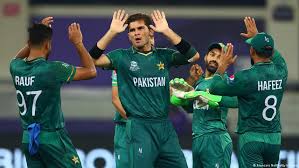
Pakistan’s decision to boycott its T20 World Cup match against India raises two basic questions: why the Pakistan Cricket Board took this step, and what it realistically expects to gain. The absence of clear answers to either only deepens the suspicion that the move was more theatrical than strategic.
Let us start with an uncomfortable truth. International cricket today is run not by the ICC, but by India. The global governing body functions less as an independent regulator and more as an extension of the BCCI’s interests. Power follows money, and India is both policymaker and paymaster. This is not conjecture — it is how the game operates.
India’s dominance of world cricket deserves criticism, just as earlier eras of English and Australian control did. The concentration of power in one country has distorted governance, competition and fairness. Restoring the ICC’s autonomy is a legitimate cause. But it is difficult to see how Pakistan’s unilateral boycott advances that goal.
India has long weaponised its political dispute with Pakistan by refusing bilateral series and declining to tour the country. No other cricketing nation would be allowed to behave this way with impunity. The recent treatment of Bangladesh only reinforces how selectively principles are applied. This form of power politics is hypocritical and self-serving — yet it continues because no one with influence is willing to challenge it.
India has the world of cricket in its pocket. Pakistan, by contrast, has a gaping hole where its money and allies should be.
England and Australia, the next rung of financial powerhouses, are economically tethered to India. Their boards have traded independence for revenue. The rest of the cricketing world lacks either the clout or the courage to confront Indian dominance. Broadcasters and sponsors follow the same logic: without access to India’s vast market, the business model collapses.
In this ecosystem, moral outrage counts for little. Fans may care about fairness and hypocrisy, but the global audience does not care enough to force change. A Pakistan-India clash remains the centrepiece of every major tournament for one reason: it prints money. It fattens Indian revenues and, given Pakistan’s recent record, often doubles as a morale boost for India as well.
Pakistan’s boycott will sting India — but only marginally. The financial pinch will be small and temporary. India will collect the points and move closer to qualification. Pakistan, meanwhile, forfeits revenue and competition. And history offers no comfort: no other country has ever made a similar sacrifice for Pakistan, nor is it likely to do so now.
Pakistan today is a middle-ranking cricket nation — financially constrained and competitively inconsistent. It lacks the leverage to rally others to its cause. In the blunt language of Donald Trump, Pakistan holds no cards. The deck is stacked, and dramatic gestures will not reshuffle it.
What remains, then, is principle. But even here the message is muddled. If the boycott is meant to support Bangladesh, it is largely symbolic. If it is a protest against India’s long-standing mistreatment of Pakistan, that mistreatment will continue regardless. If it is a stand against India’s stranglehold over world cricket, the cause may be just, but the method is amateurish.
What Pakistan actually seeks — whether it admits it or not — is a rebalancing of power in international cricket. That will not come through boycotts or moral posturing. It requires a long-term strategy built on two foundations: restoring Pakistan’s commercial and political relevance in the game, and rebuilding its strength on the field.
Shouting about a boycott may feel cathartic. It may even briefly bruise India’s ego. But it changes nothing. If Pakistan truly wants to challenge the existing order, it must focus on becoming a cricketing superpower again — financially independent, competitive, and influential.
Achieve that, and others may follow. Until then, gestures will remain substitutes for strategy — and noise will continue to masquerade as resistance.