
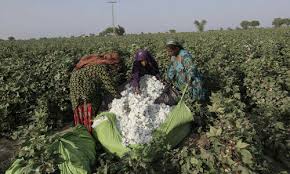
LAHORE: Cotton arrivals at ginning factories have posted a marginal increase this season, but rising international trade challenges and declining textile exports are fuelling concerns across Pakistan’s cotton and textile sectors.
Data released by the Pakistan Cotton Ginners Association (PCGA) show that 5.545 million bales reached ginning factories nationwide by January 31, up 35,000 bales — or 0.62 per cent — compared to the same period last year.
Punjab’s ginning factories received 2.63m bales, reflecting a decline of nearly 3pc. In contrast, combined arrivals in Sindh and Balochistan rose about 4pc to 2.915m bales. The decline in Punjab has been attributed largely to reduced output in several districts of south Punjab, while stronger production in Sindh’s districts such as Sanghar, Nawabshah and Naushahro Feroze supported higher arrivals.
During the period under review, textile mills purchased 4.987m bales from ginners, while exporters bought 178,000 bales. Around 380,000 bales remain unsold with ginning factories, down from 486,000 bales last year, suggesting relatively stronger market absorption. At present, 16 ginning factories are operational in Sindh, compared to 84 in Punjab.
Despite the slight year-on-year increase, overall cotton production remains well below the official target of 10.2m bales for FY26, with total output expected to remain around 5.6m bales.
The industry, meanwhile, faces mounting external pressures. A continued decline in cotton and textile exports, along with trade concessions granted to India by major markets, has raised alarm within the sector. The European Union has allowed duty-free access for Indian exports, while the United States has lowered tariffs on Indian goods to 18pc — compared to 19pc for Pakistan — after earlier announcing a 50pc duty.
Cotton Ginners Forum Chairman Ihsanul Haq said these developments have triggered widespread concern across Pakistan’s cotton sector. He emphasised that lowering production costs to match those of regional competitors was essential to improving export competitiveness.