
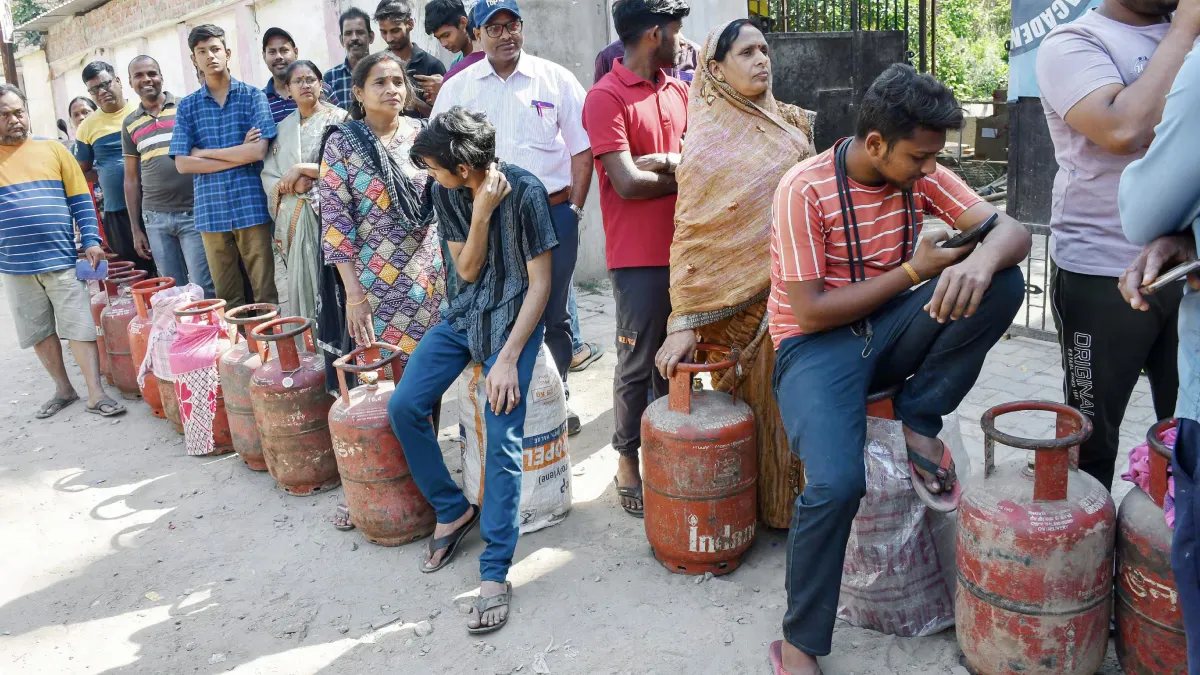
HYDERABAD: Indian police have seized 414 cooking gas cylinders hidden inside a graveyard in Hyderabad and detained several individuals allegedly involved in black-market sales amid supply shortages linked to the ongoing US-Israeli war on Iran, officials said on Thursday.
The raid comes as authorities intensify efforts to crack down on hoarding and illegal sales of liquefied petroleum gas (LPG) after shipping disruptions caused by the conflict led to shortages across the country.
India, the world’s second-largest importer of LPG, relies on overseas supplies for nearly 60 per cent of its demand, with most imports coming from the Middle East.
Speaking at a regular briefing on the Middle East crisis, Sujata Sharma, a senior official at the Ministry of Petroleum and Natural Gas, said thousands of raids had been carried out in recent days.
“Just yesterday, around 2,600 raids were conducted and nearly 700 cylinders were seized,” she said.
She added that more than 400 cylinders were recently recovered from a single location inside a graveyard in Hyderabad.
“Ten people have been detained, and the distributor involved has been suspended,” Sharma said.
According to police, the suspects were selling both domestic and commercial gas cylinders from the graveyard at prices nearly three times higher than the official market rate.
A commercial cylinder priced at around 2,100 Indian rupees ($22) was allegedly being sold for up to 6,000 rupees.
Police said the total value of the seized cylinders, along with vehicles used in the operation, was estimated at nearly 2.2 million rupees.
Reuters said it was unable to immediately contact the accused or their representatives for comment.
Officials, however, assured the public that domestic supply remains stable.
“The supply of natural gas to domestic consumers is 100 per cent assured,” Sharma said. “LPG prices have remained stable despite international volatility, and there has been no increase in the price of domestic cylinders.”
To ease pressure on LPG supplies, India is also encouraging the use of alternative fuels such as kerosene, coal and biogas, while speeding up the expansion of piped natural gas connections for households.