
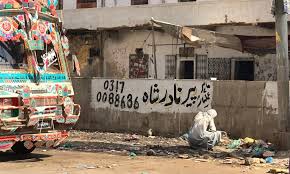
As cities expand and density intensifies, urban planning has quietly become a question of public health and human dignity. Decisions about how cities are designed increasingly shape how people move, breathe and live within them. From walkable streets and cycling lanes to green spaces and public transport, modern urban planning is now widely recognised as a public health intervention.
Equally important — and far less discussed — is sanitation. Access to safe, dignified hygiene facilities is fundamental to healthy, inclusive cities. Yet public toilets continue to be treated as peripheral amenities rather than essential urban infrastructure.
This article focuses on that neglected pillar by examining the availability and condition of public toilets in Karachi’s market areas, particularly Saddar, where the absence of adequate sanitation poses serious public health and equity concerns.
Pakistan’s sanitation gap
Access to toilets is central to safe sanitation and basic human dignity. Global recognition of this reality has grown over the past two decades, from the founding of the World Toilet Organisation in 2001 to the United Nations’ designation of World Toilet Day in 2013. These milestones helped push sanitation into mainstream policy discussions and challenged the long-standing silence around toilets in urban planning.
Yet the scale of the crisis remains stark. According to the World Health Organisation and Unicef, 3.4 billion people worldwide still lack access to safe toilets. Contaminated water sources and sanitation-related diseases remain major causes of preventable illness and death, particularly among children. Nearly 1,000 children under five die each day from diseases linked to inadequate water, sanitation and hygiene.
Pakistan faces an especially acute challenge. World Bank estimates suggest that around 79 million people lack access to proper toilet facilities. While rural areas are worst affected, rapidly growing cities suffer from weak planning, overstretched infrastructure and neglect of basic services. Open defecation and unsafe sanitation contaminate groundwater and increase the spread of disease.
The consequences extend beyond health. Poor access to toilets disproportionately affects women, exposing them to harassment, health risks and the need to delay bodily functions, which can lead to serious medical issues. The Covid-19 pandemic and recurring infectious disease threats have further highlighted the importance of functional public toilets as a cornerstone of urban resilience.
A private need in public spaces
Karachi, despite being a major economic engine, offers remarkably few dignified public amenities. Hygiene infrastructure, in particular, remains severely inadequate. Integrating sanitation into dense urban environments requires intentional planning that prioritises safety, accessibility and dignity — all of which directly enhance urban livability.
To assess this gap, a study by the Department of Architecture and Planning at NED University examined public toilet access in Saddar, one of the city’s busiest commercial districts. Saddar’s mix of retail, wholesale markets, offices and institutions generates constant pedestrian movement throughout the day, making sanitation facilities especially critical.
The findings were troubling. While the absence of toilets may go unnoticed by short-term visitors, for workers, vendors and shoppers who spend long hours in the area, the lack of clean and accessible facilities is a daily hardship. Despite global momentum around sanitation reform, Pakistan’s “toilet revolution” has yet to reach such urban centres.
Findings from Saddar
For analysis, Saddar was divided into five blocks representing high-activity zones. Toilets in ancillary spaces, such as petrol pumps, were also documented.
In areas around NED University’s city campus, some facilities exist within institutions such as colleges, museums and People’s Square. However, access is restricted by timing or entry requirements, and some toilets are male-only, poorly designed and unusable for women.
The Lighthouse Market area — among Saddar’s busiest — lacks any formal public toilets aside from those in a mosque. These are poorly maintained, lack privacy, exclude women and charge a fee, making them unsuitable for the scale of activity they are meant to serve.
In the Sindh High Court and Secretariat zone, well-maintained washrooms exist but are semi-public and accessible only to authorised users. Nearby high-footfall areas, including the passport office, have no public toilets at all.
Zainab Market and surrounding malls technically provide toilets, but these are poorly located, inadequately designed and largely inaccessible. Gender segregation is weak, privacy is compromised and there are no provisions for elderly users, people with disabilities or children. Women’s access, in particular, is severely constrained.
Around Empress Market, Jahangir Park and Mochi Gali, toilet access remains uneven. Jahangir Park has comparatively good facilities, but restricted entrances significantly limit access for women from nearby markets. Empress Market itself has no proper toilets; an illegally constructed facility on a footpath is overcrowded, poorly designed, lacks gender segregation and charges users despite offering minimal hygiene standards.
Petrol pumps, often relied upon as alternatives, are inconsistent. Some keep toilets locked or restrict use to staff, while others offer limited access without adequate maintenance.
An urgent call for reform
Across Saddar, the number and quality of toilets fall far short of what is required for the area’s daily footfall. Existing facilities appear designed only for people in extreme need rather than as a planned public service. Poor maintenance, unsafe wiring, contaminated water, lack of signage and cramped layouts further undermine usability and safety.
Public toilets are not a luxury. They are core urban infrastructure, as essential as roads or drainage. International examples show that well-managed facilities are often delivered through public-private partnerships, with private operators maintaining toilets while offsetting costs through commercial activity or advertising.
The state, meanwhile, must ensure access to appropriate locations, utilities and regulatory support. As one of Karachi’s historic and commercial hearts, Saddar deserves sanitation infrastructure that reflects the needs of its diverse users. A city cannot claim to be functional, inclusive or humane if it fails to provide something as basic — and as vital — as a clean, accessible public toilet.