
Death has a way of rearranging life’s furniture. Drawers long shut are pulled open; memories dulled by time return with startling clarity. Sometimes, what is left behind offers comfort or quiet insight. On rare occasions, it offers revelation.
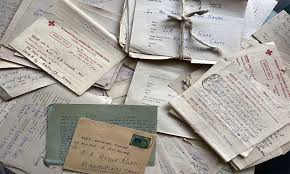
In this case, it was a bundle of 159 letters, tied together with string — letters that chart the extraordinary life of one man and the quiet endurance of his family between 1971 and 1974.
This is their story.
The letters were written by my Nana — my maternal grandfather — Saiyid Safdar Nawab, and discovered days after his death on December 26, 2025. Spanning three turbulent years, they trace his captivity as a prisoner of war in India after the 1971 Indo-Pak war, and the emotional geography of a family separated by borders, war and time.
As with all stories, it begins at the beginning.
From Aligarh to Dhaka
Born in Aligarh in 1932 to a sessions court judge, Safdar Nawab migrated to West Pakistan at the age of 20. After completing a postgraduate degree in physics, he joined the Army Education Corps in May 1957 and spent more than a decade teaching at the Pakistan Military Academy.
In mid-1971, following the closure of the Military Training Directorate at GHQ Rawalpindi, he was assigned to the Martial Law Headquarters in Dhaka as a G-2 officer. Fate intervened when the officer initially selected declined the posting, and Safdar Nawab arrived in Dhaka in August 1971. His wife, Shahnaz, and their two young children remained at their home on Hythe Road in Rawalpindi.
By then, the situation in East Pakistan had already deteriorated. Military action had begun in March, and by December, Indian forces had entered the conflict. When the war ended, Pakistani personnel stationed in the former eastern wing were taken prisoner.
It was in the immediate aftermath that Safdar Nawab wrote the first letter of the 159.
Letters from “Dacca”
Dated December 27, 1971, the letter is written on an International Committee of the Red Cross message form — sparse, regulated, and stamped “Prisoner of War Mail.” Limited to 25 words, it was addressed to his wife and children:
“I wish and pray that you are well. I am fine and hope to see you all soon. We move out of Dacca in two weeks’ time.”
The form reached the Rawalpindi GPO nearly two months later, on February 21, 1972. In those early months, Safdar Nawab continued writing without knowing whether a single word had reached home.
Still, he wrote.
He reassured his family about his health, his conditions, his morale. He spoke of welfare work among fellow officers and urged his wife not to worry. All the while, his family had no confirmation of where he was — or whether he was safe.
A gap of 10 days in January 1972 tells its own story.
A Prisoner in His Birthplace
On January 26, 1972, a postcard arrives — now printed in English and Hindi. Safdar Nawab is no longer in East Pakistan. He is a POW in India.
“We left Dacca on the 17th and arrived here near Roorkee on the 24th… It was a long but comfortable journey… Tomorrow is Eid — Eid Mubarak.”
The words “near Roorkee” are visibly censored, hinting at the surveillance that shadowed every message. Soon after, he is moved again — this time to Camp 54 in central India, near Sagar.
What weighs on him most is the silence from home.
By March 1972, after months without a reply, he writes through the Red Cross in Islamabad, pouring out his anxiety. He recounts his movements, the monotony of camp life, and his growing worry for his family’s welfare. He reassures them even as he pleads — quietly — to be reassured himself.
For four and a half months, he receives nothing.
Then, finally, a breakthrough.
Life Inside Camp 54
On May 2, 1972, relief pours through his words: three letters from Shahnaz arrive together. Communication, at last, is restored.
From that point on, the letters become fuller, warmer, and more detailed. He writes about finances, schooling, extended family, and dreams of building a home in Rawalpindi. In return, news from home gives him respite from the monotony of captivity.
He describes camp life with remarkable restraint: shared quarters, electricity and running water, prayer, bridge games, volleyball and cricket tournaments. He lists canteen items with near-tender attention — eggs, jam, fruit, milk, Ovaltine — and notes the pride felt when Pakistani relief parcels arrive.
Yet beneath the composure lies longing.
He mourns missing his daughter’s early years, treasures parcels from home, and repeatedly asks for one thing above all else: a photograph of his family. When it finally arrives in April 1973, it gives him “enormous pleasure,” even though it took two months to reach him.
He studies the faces of his children, uncertain when — or if — he will see them again.
Hope, Delayed
Throughout his captivity, Safdar Nawab remains convinced he will return home. He follows diplomacy closely — the Simla Summit, troop withdrawals, negotiations — and measures time by rumours of repatriation.
Meanwhile, Shahnaz Nawab turns her waiting into action. A literature graduate and journalist, she writes articles and pamphlets calling for the release of Pakistani POWs. In 1973, she protests at the airport with other POW families as UN Secretary-General Kurt Waldheim visits Rawalpindi.
Pressure builds. Trains begin rolling back across Wagah.
But for Safdar Nawab, the wait stretches on.
By early 1974, his name is repeatedly missing from repatriation lists. Then comes illness — back pain worsened by stress and poor diet — and hospitalisation in India’s military hospital. Even then, his letters are calm, hopeful, restrained.
His final letter, dated March 15, 1974, speaks of trains yet to come.
He will not be on them.
Home, at Last
On April 21, 1974, Safdar Nawab finally crosses Wagah — on the last POW train from India. His wife and son are waiting in Lahore. The date coincides with Allama Iqbal’s death anniversary, a detail his family will never forget.
He resumes his life quietly. Promotions follow. He becomes principal of Lawrence College Murree, retires as a brigadier, and later serves at Kahuta. He lives to the age of 94.
What he leaves behind is more than letters.
It is a record of endurance — of a man who remained present in his life while forcibly removed from it; who, stripped of freedom and agency, did the one thing still within his control.
He wrote himself home.