
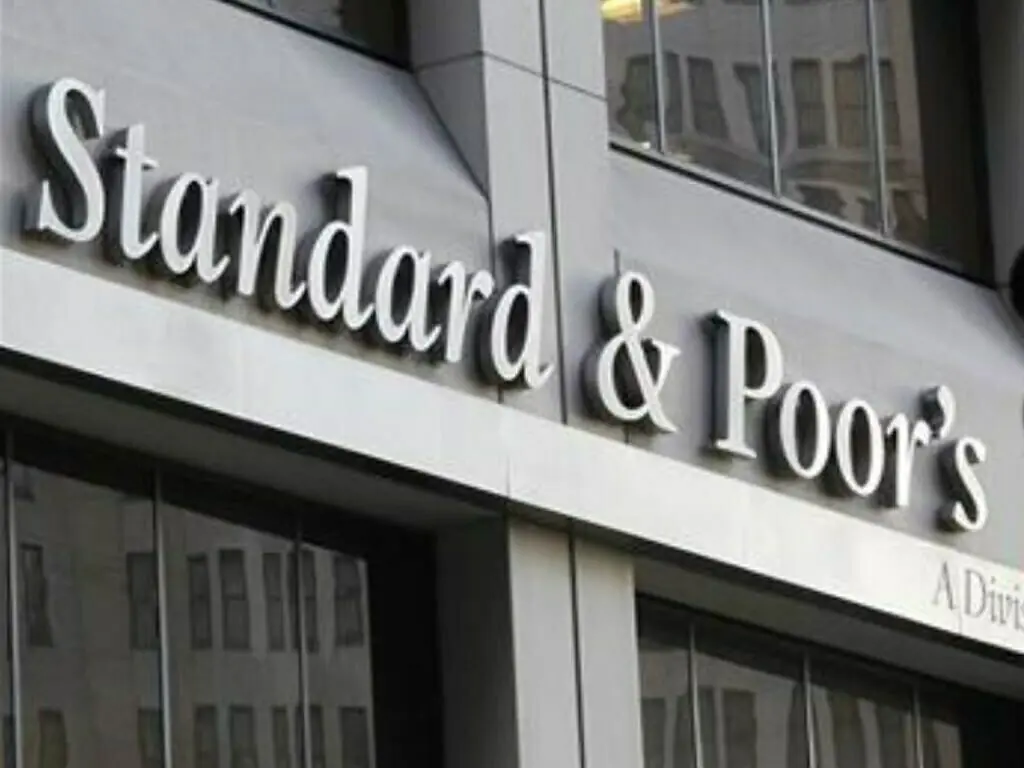
ISLAMABAD: S&P Global Market Intelligence has forecast an improvement in Pakistan’s macroeconomic outlook over the current and next fiscal years, broadly endorsing projections made by the State Bank of Pakistan (SBP).
In comments on the SBP’s latest monetary policy decision — which kept the benchmark interest rate unchanged at 10.5 per cent on Monday — S&P said real GDP growth is expected to reach 3.5pc in FY26 before strengthening further to 4.4pc in FY27.
These estimates are largely aligned with the central bank’s outlook, which projects economic growth in the range of 3.75–4.75pc for FY26, supported by stronger-than-expected momentum in commodity-producing sectors and spillover effects on services. According to the SBP, this momentum is likely to carry into FY27, aided by earlier monetary easing and sustained macroeconomic stability.
S&P’s projections are, however, more optimistic than those of the International Monetary Fund, which last week revised Pakistan’s growth forecast down to 3.2pc from an earlier estimate of 3.6pc.
On the external front, the SBP expects the current account deficit to remain contained within 0–1pc of GDP in FY26. Backed by steady remittance inflows and planned official financing, foreign exchange reserves are projected to exceed $18 billion by end-June 2026 and rise further in FY27, approaching the benchmark of three months of import cover.
S&P Global Market Intelligence — distinct from S&P Global Ratings — projects the current account deficit at 0.5pc of GDP in calendar year 2026, widening to 1.3pc in 2027. It cautioned, however, that downside risks persist due to heightened global tariff uncertainty, volatile commodity prices, and increasing geopolitical fragmentation.
On inflation, the SBP expects price pressures to stabilise within its target range of 5–7pc over the next two years, after temporarily exceeding the upper bound for a few months in calendar year 2026.
S&P, meanwhile, forecasts inflation at 5.1pc in 2026, edging up slightly to 5.6pc in 2027. It warned that risks to the inflation outlook remain skewed to the upside, citing potential volatility in global commodity and domestic wheat prices, possible adjustments in administered energy tariffs, and a stronger-than-anticipated recovery in domestic demand.