
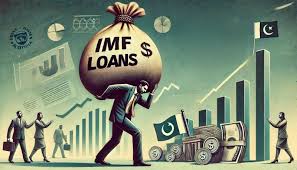
Every few months, Pakistan’s officialdom and its allied stakeholders return to a familiar and reassuring refrain: the need for Pakistan to “exit the IMF”. The language is well worn and predictable — exports, productivity, human capital, technology, governance, national coordination. These ideas are routinely presented as cures in themselves, as though naming them were enough to secure independence from the Fund. What is almost always absent, however, is the pathway. The debate rarely engages with concrete policy actions, operational tools, or institutional changes required to achieve that goal. Aspirations are framed as strategies, outcomes are confused with reforms, and reform itself is reduced to rhetoric.
Most so-called “exit plans” share a fundamental flaw: they mistake ends for means. Saying exports must grow is not a policy. Declaring the need to improve human capital is not reform. Calling for better coordination or implementation does not constitute an economic strategy. These are desired outcomes, not instruments. The uncomfortable but essential question is far more basic: what specific policy changes will alter behaviour tomorrow?
This confusion is not accidental. Pakistan does not repeatedly return to the IMF because it lacks ideas or blueprints. It returns because the structure of its economy consistently produces balance-of-payments crises. IMF dependence is not a technical failure but the predictable outcome of a political economy that rewards rent-seeking, protects incumbents, blocks competition, misprices energy, indirectly taxes exports, and substitutes rules with discretion. Independence from the IMF cannot be declared; it must be earned by dismantling the domestic mechanisms that repeatedly recreate financing gaps.
The IMF typically enters when three conditions converge: foreign exchange earnings fail to keep pace with external needs; fiscal deficits are financed through money creation or unsustainable borrowing; and credibility collapses, shutting off access to global capital markets. Pakistan encounters this cycle not merely due to external shocks or misfortune, but because an extractive state apparatus systematically suppresses productivity and growth — especially through trade — by distorting incentives. The result is a structurally fragile economy that periodically exhausts both foreign exchange and credibility.
The starting point, therefore, is to abandon the illusion of planning.
For decades, Pakistan has treated growth as something that can be engineered through plans, projects, committees and conferences. Strategies are announced, development programmes approved, targets proclaimed and monuments built. Meanwhile, the real economy is suffocated by a predatory and convoluted tax regime, discretionary permissions, distorted prices and regulatory sludge — marked by opaque, excessive and unevenly applied rules that reflect deep distrust of markets and an exaggerated belief in state omnipotence.
Growth does not emerge from better plans. It emerges when firms can enter, expand, export, hire and invest without seeking permission — within a competitive, predictable and rule-based environment. That is where IMF dependence is created, and that is where it must be dismantled.
Reform must begin with energy — electricity and gas — because this is where every IMF programme eventually unravels. Pakistan’s energy crisis is not one of capacity but of policy, pricing and governance. Consumers and taxpayers bear the cost of government inefficiency through unreliable supply and unpredictable tariffs, steadily eroding state credibility. The sector is neither competitive nor realistically priced, and is governed by a fragmented institutional structure of nearly two dozen entities operating without effective coordination.
Policy incoherence — combining guaranteed returns, ill-designed subsidies and politicised operational decisions — alongside weak management across the supply chain has distorted tariffs and shielded inefficiency. Distribution companies continue to incur losses without accountability for theft, recoveries or performance. The outcomes are predictable: mispriced consumption, distorted investment signals, rapid off-grid migration as solar costs fall, and a permanent circular debt that functions as a quasi-fiscal deficit. This ultimately reappears as inflation, borrowing, or IMF conditionality.
The solution lies neither in ad hoc bailouts nor in expanding subsidies. It requires a rules-based pricing regime: transparent, cost-reflective tariffs within a competitive framework, automatic adjustment mechanisms, and enforceable governance contracts that hold utilities accountable. Vulnerable households should be protected through targeted cash transfers, not by penalising commercial and industrial activity through pricing distortions that undermine the entire system.
Taxation is the next pillar of reform. The problem is structural, not a matter of rates. Pakistan’s tax system is fragmented across jurisdictions and agencies, riddled with exemptions, inconsistent thresholds and discretionary enforcement, and undermined by low trust. Authorities pursue compliant taxpayers aggressively while habitual non-payers operate with impunity.
The belief that high rates, complexity and coercion can force formalisation must be abandoned. Experience shows the opposite. Punitive, opaque and unpredictable tax regimes shrink the formal sector, expand informality, erode compliance and deter investment. A growth-oriented tax system must be simple, predictable, low-rate and broad-based, treating all income streams uniformly. Its goal should be to attract firms into formality, not punish them for entering it.
Broadening the base requires freezing new exemptions, publishing the fiscal cost of existing ones, fully digitising enforcement, and taxing sectors that have long remained outside the net. Until the state penalises non-payment and taxes privilege rather than productivity, deficits will persist and borrowing will continue.
Pakistan must also accept that informality will remain significant during the transition. Formalisation follows growth; it does not precede it. Attempts to criminalise cash or restrict transactions in the name of fighting “black money” only push activity further underground and slow economic expansion.
Nadeem ul Haque is former vice-chancellor of PIDE and former deputy chairman of the Planning Commission. He is currently director at the think tank Socioeconomic Insights and Analytics. Shahid Kardar is a former governor of the State Bank of Pakistan.